
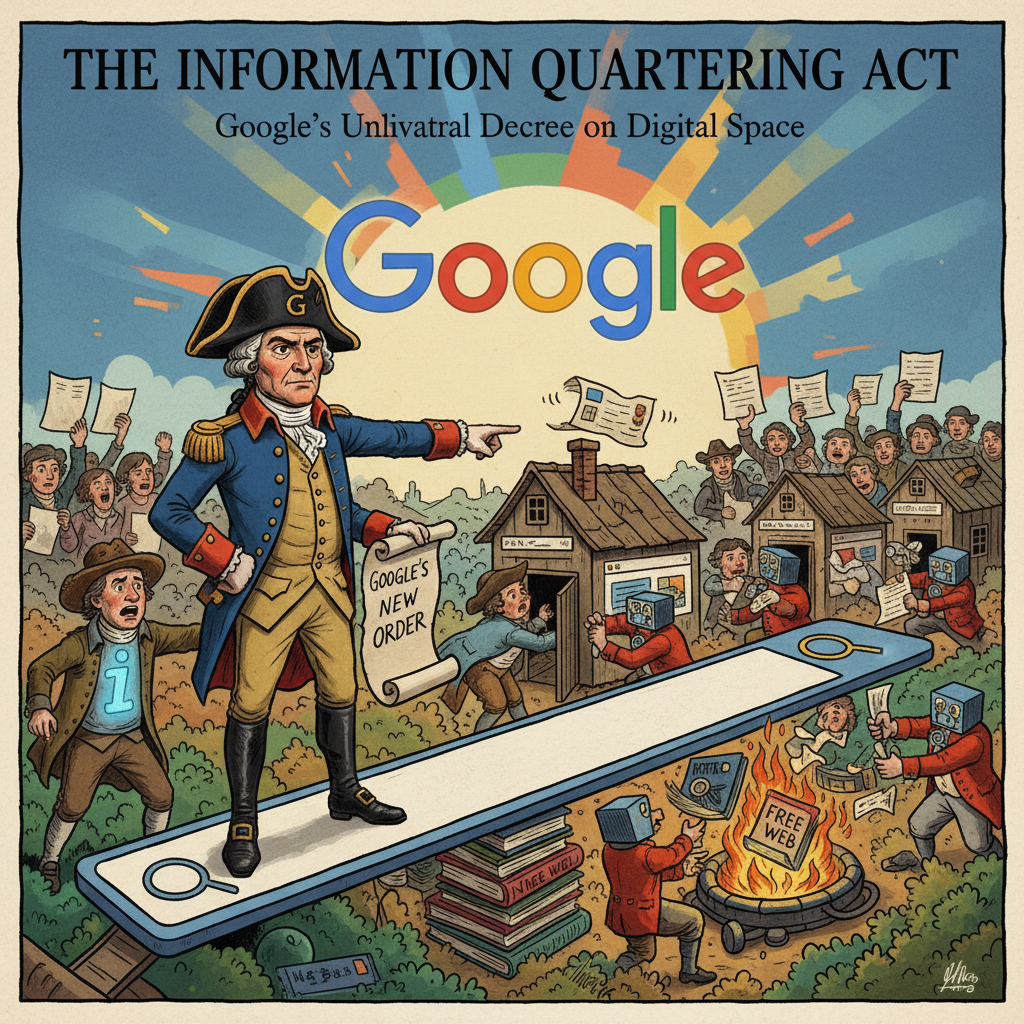
Google's recent reengineering of its venerable search interface marks a profound moment, signalling not merely a technological shift but a reordering of the very landscape of digital liberty.
Details:
- Google's "biggest upgrade" in 25 years ushers in an era prioritizing AI-generated, zero-click answers, demoting the traditional blue links that once defined information access.
- This unilateral redrawing of the digital commons, much like the Proclamation of 1763, effectively fences off established territories for publishers, redirecting the flow of digital commerce without consent.
- The move to algorithmically curated content, driven by a "TikTok-ification" of the internet, subtly diminishes individual agency, deciding what users "want" rather than facilitating independent discovery.
- Americans' confidence in Big Tech has plummeted from 71% in 2015 to a mere 24% in 2025, reflecting a deep-seated skepticism towards these self-appointed digital arbiters.
- The companies that engineered the early internet are now rapidly dismantling it, not out of user demand, but to avoid being "disruptees" in a new, unproven business model.
Why it Matters:
This algorithmic shift is a profound assertion of authority over the digital marketplace, echoing imperial mandates. Unilaterally redefining information access and disrupting livelihoods undermines digital liberty. John Dickinson's warning resonates: 'But now the inhabitants will be thinly scattered over an immense region, as those who want settlements, will chuse to make new ones, rather than pay great prices for old ones.' This reconfigures the public sphere by corporate prerogative, not individual inquiry. The erosion of an open information commons fosters a passive digital citizenry. The 'F I N I S.' for empowering search may quietly mark a '_Sic transit Gloria Americana_' for digital self-governance, foreshadowing new declarations of independence.