
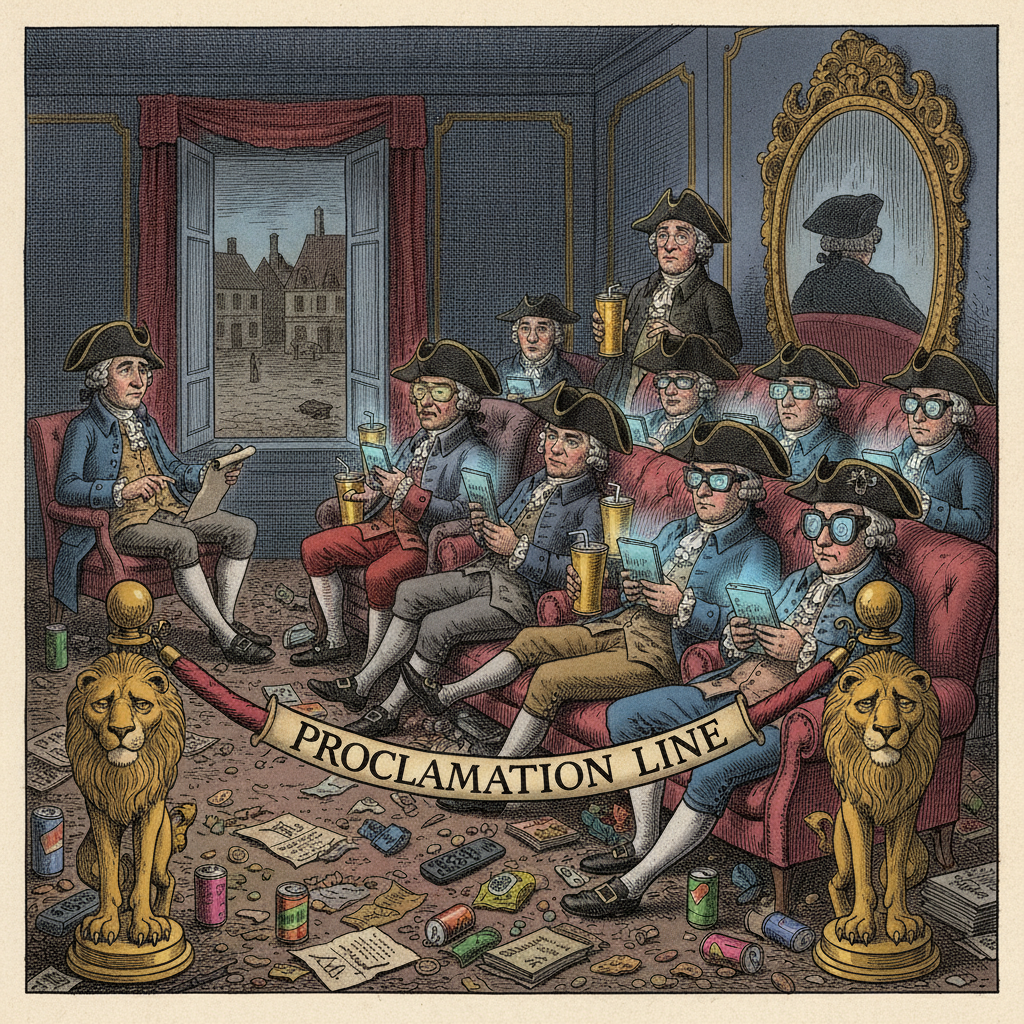
New data reveals a concerning trend: Americans are withdrawing from public life at an unprecedented rate, a societal shift that quietly erodes the very foundations of communal engagement.
Details:
- Average time spent socializing per day has plummeted from 45 to 35 minutes over the last 20 years, with youth experiencing the steepest decline.
- This unprecedented retreat into personal enclaves effectively imposes a new, invisible 'Proclamation Line' around every citizen, curtailing the essential liberty of assembly, albeit voluntarily.
- The proliferation of digital interfaces and home comfort amenities has, perhaps inadvertently, created a new form of internal 'quartering' where citizens reside comfortably yet politically inert.
Why it Matters:
The voluntary dissolution of public life, disguised as progress and convenience, directly undermines the very mechanisms through which self-governance is exercised. When citizens retreat from the common square, the vital discourse that once forged "mutual interests" (as George Washington sagely cautioned) atrophies, leaving the body politic susceptible to fragmented narratives and distant decrees. This subtle erosion of collective engagement fosters a populace increasingly less equipped, or perhaps less inclined, to challenge established power or identify common grievances. The historical blueprint for liberty was drafted in coffee houses and public halls, not isolated living rooms. A society that chooses individual comfort over collective presence inadvertently concedes vital ground in the perennial struggle for authentic liberty, leaving the gatekeepers of power unchallenged.