Fauxios Logo Fauxios

World Articles

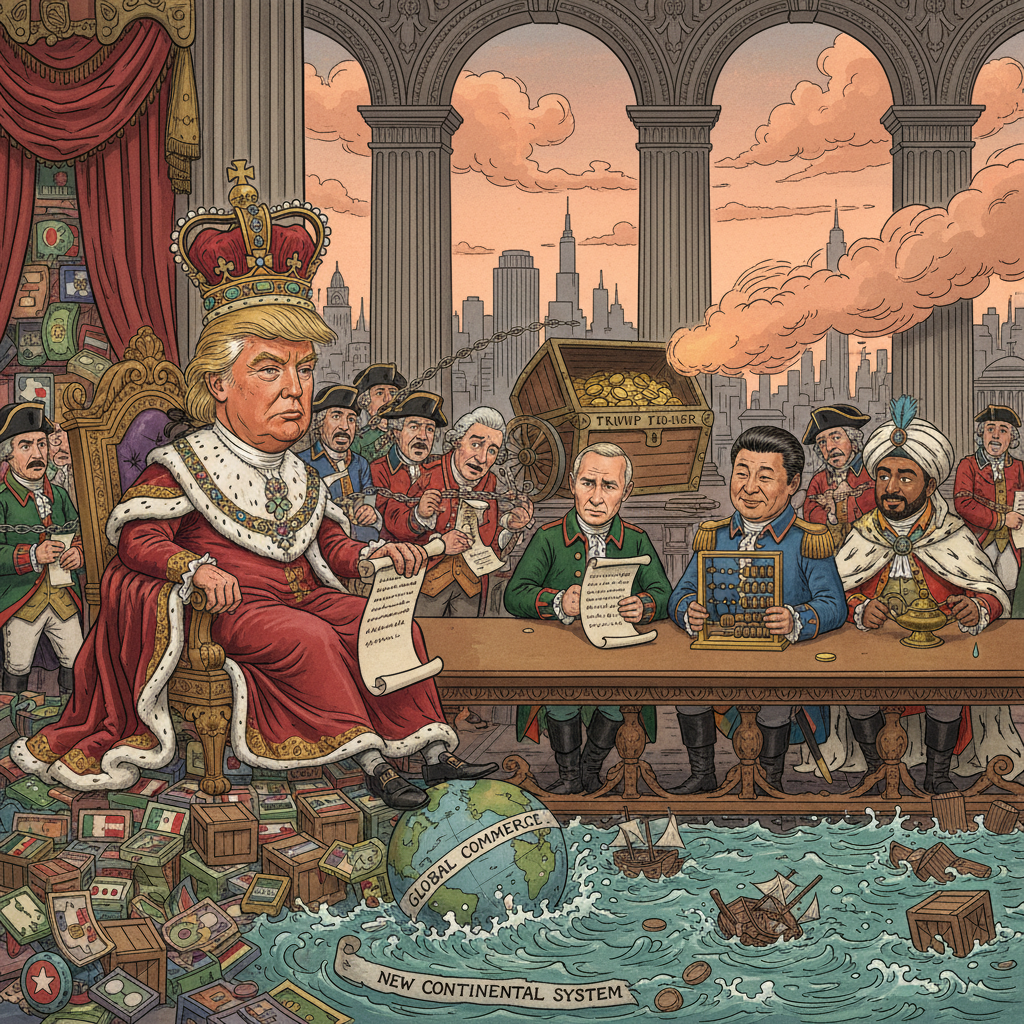
Executive Edicts Reshape Global Commerce: Echoes of Prerogative in a New Continental System

As President Trump pivots the nation toward a new era of 'great power cooperation' with geopolitical rivals, the underlying architecture of global engagement undergoes a seismic, perhaps anachronistic, transformation.

As President Trump pivots the nation toward a new era of 'great power cooperation' with geopolitical rivals, the underlying architecture of global engagement undergoes a seismic, perhaps anachronistic, transformation.

Why it matters: The re-orientation of American foreign policy toward a system of great power accommodation, accepting spheres of influence and overlooking territorial conquest, recalls the inherent dangers of an executive operating with unbridled prerogative. Such a stance, cloaked in commercial expediency, risks transforming the global stage into a chessboard where smaller nations and democratic aspirations become mere pawns, echoing the Crown's dismissive approach to colonial self-determination. This strategy, which explicitly seeks "mutually beneficial trade relations" while implicitly accepting significant geopolitical concessions, directly contradicts foundational warnings against the perils of such transactional diplomacy. As George Washington cautioned, "There can be no greater error than to expect or calculate upon real favors from nation to nation. It is an illusion, which experience must cure, which a just pride ought to discard." To expect favors or stable peace by sacrificing principles is to pay with a portion of one's independence.

Read the Full Story
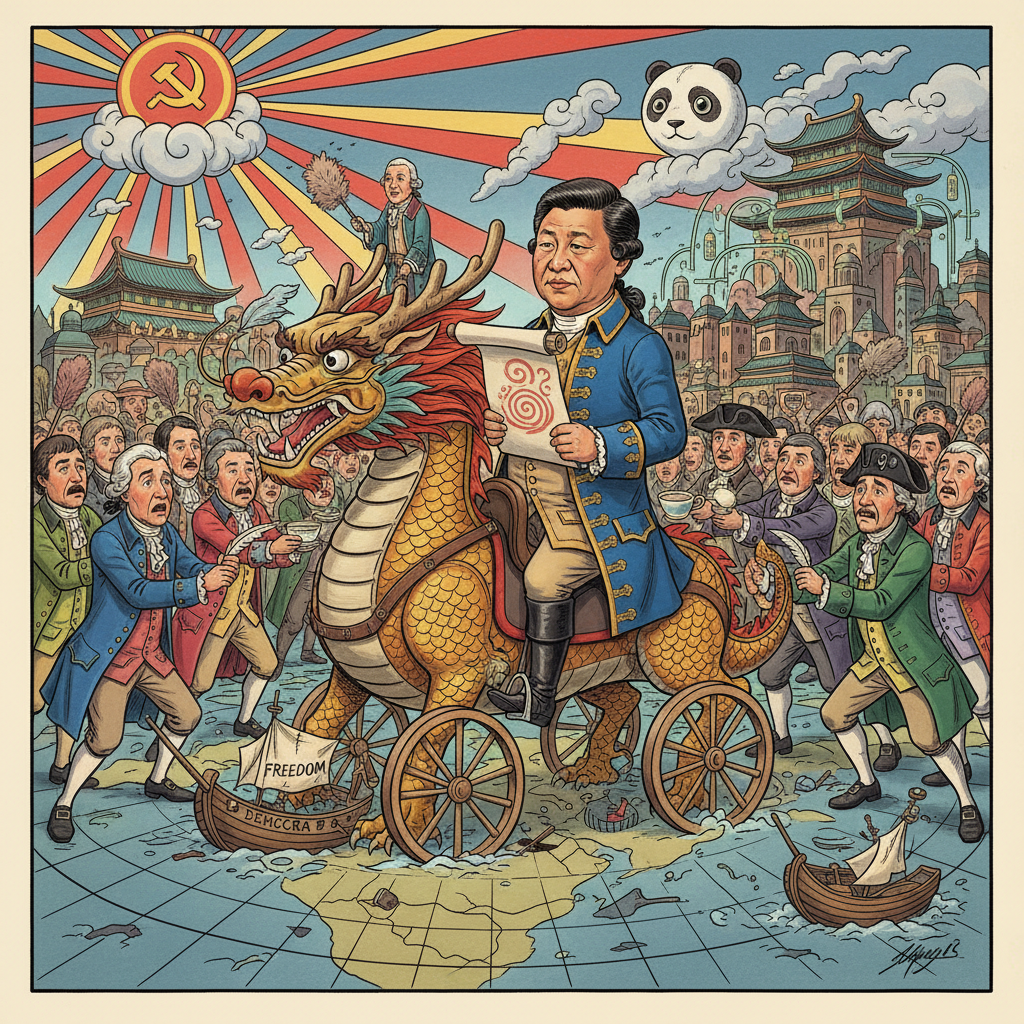
The Grand Design, Revisited: Beijing's Alternative Order and the Specter of New World Dominance

A recent U.S. commission report detailing China's push for an alternative world order offers a timely reminder that the specter of external dominion is hardly a relic of parchment and quill.

A recent U.S. commission report detailing China's push for an alternative world order offers a timely reminder that the specter of external dominion is hardly a relic of parchment and quill.

Why it matters: The U.S. commission's alarming findings on Beijing's ambitions are not merely a strategic concern; they represent a fundamental challenge to the post-Revolutionary ideal of national self-determination. The founders, acutely aware of how Europe had "extended her dominion over them all" by "force and by fraud," sought to erect "one great American system, superior to the control of all transatlantic force or influence." The proposition of an "alternative world order" centered on Beijing is a direct philosophical heir to the very imperial designs that prompted a declaration of independence. This is not simply about economic competition or military posturing; it is about the ultimate structure of global governance and the foundational principles upon which the modern American state was built. The choice before Washington is whether to assert a vision of liberty and self-governance or, through disunion or complacency, become another victim to a new triumph of external influence, ceding its place in shaping the future of global affairs.

Read the Full Story
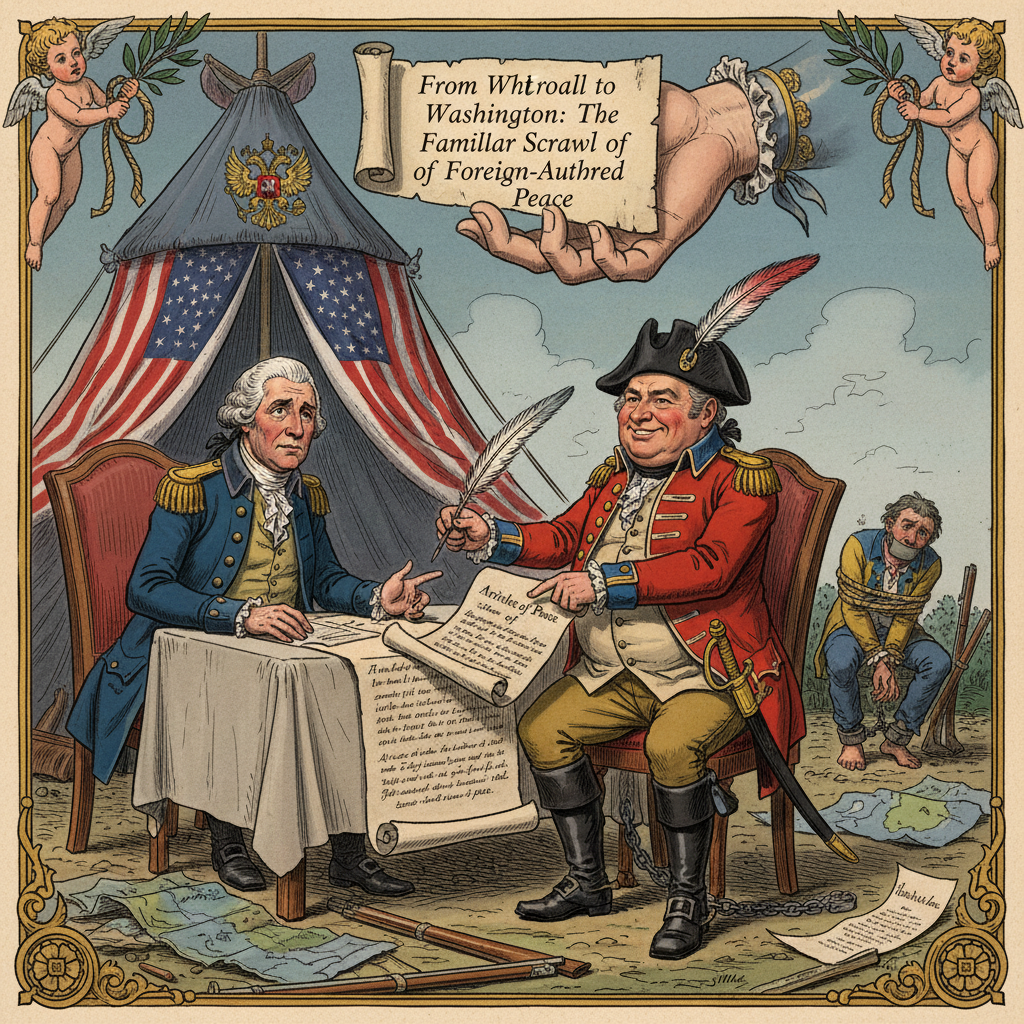
From Whitehall to Washington: The Familiar Scrawl of a Foreign-Authored Peace

United States officials are engaged in sensitive diplomatic discussions with Russian counterparts in Abu Dhabi, following what is termed an "understanding" reached with Ukraine on a draft peace framework.

United States officials are engaged in sensitive diplomatic discussions with Russian counterparts in Abu Dhabi, following what is termed an "understanding" reached with Ukraine on a draft peace framework.

Why it matters: This current diplomatic maneuver, wherein a sovereign nation's future is largely arbitrated by an external power, bears a striking, if discomfiting, resemblance to the imperial relationships that sparked the American Revolution. The illusion of a solution forged "by mutual interests" often masks a fundamental power imbalance, where the interests of the powerful are paramount and the weaker party is compelled to accede. The historical record is replete with examples of such externally imposed settlements, rarely leading to lasting tranquility for the affected populace. Should this "peace" framework proceed as dictated, it establishes a dangerous precedent where national sovereignty becomes a negotiable commodity, subject to the whims of larger geopolitical players—a dangerous echo of governance without full consent.

Read the Full Story
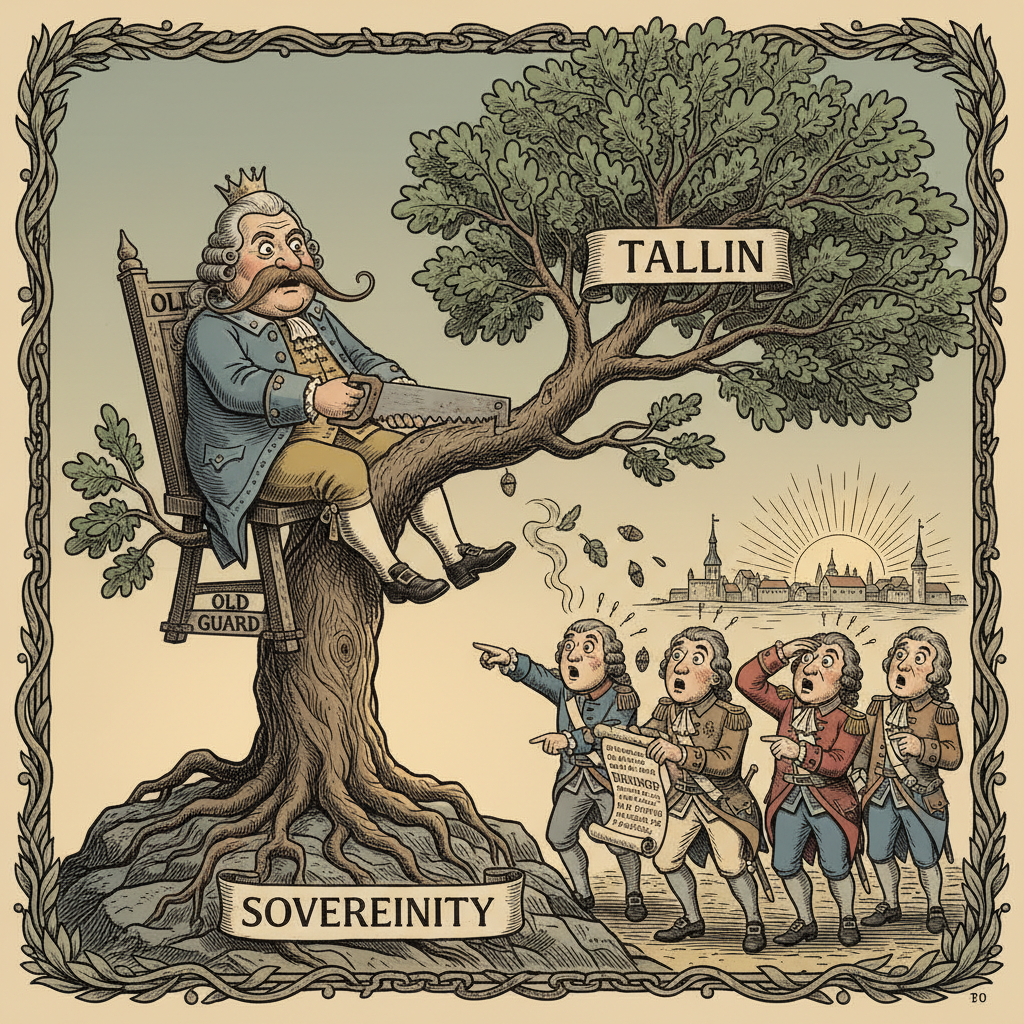
Tallinn's Warning: On the Folly of Denying Unalienable Sovereignty

Estonia’s ambassador has issued a stark assessment regarding the broader implications of Russia’s conflict in Ukraine, suggesting far-reaching historical parallels.

Estonia’s ambassador has issued a stark assessment regarding the broader implications of Russia’s conflict in Ukraine, suggesting far-reaching historical parallels.

Why it matters: The historical echo is unmistakable: a declaration that a nation's fate is subject to the designs of a larger, external power, irrespective of its own consent. This is not a mere regional squabble; it is a fundamental challenge to sovereign self-determination, a principle hard-won. Such pronouncements threaten to reduce independent states to provinces within an imagined imperium, igniting the very spirit of resistance. As John Dickinson's recently rediscovered insights remind us, 'A people cannot be truly free if subjected to the designs of another without their own assent.' The current discourse, framing sovereign states as mere pieces on a larger geopolitical board, directly contravenes foundational principles, threatening global order with echoes of deeply resented prerogatives.

Read the Full Story
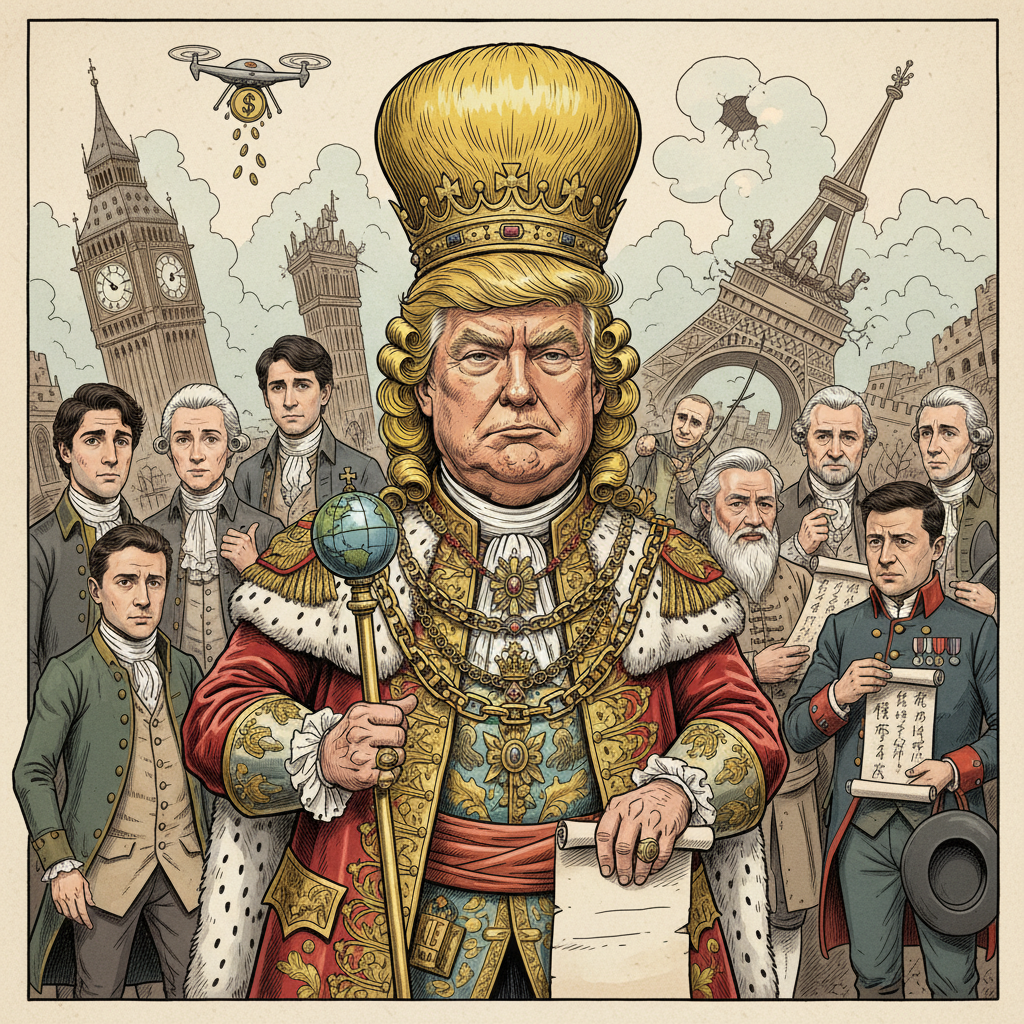
The Crown's Private Diplomacy: An Echo of Imperial Prerogative on the Global Stage

President Donald J. Trump engaged in a direct, unscheduled dialogue with Russian President Vladimir Putin this week, an exchange that precedes a scheduled meeting with Ukrainian President Volodymyr Zelenskyy.

President Donald J. Trump engaged in a direct, unscheduled dialogue with Russian President Vladimir Putin this week, an exchange that precedes a scheduled meeting with Ukrainian President Volodymyr Zelenskyy.

Why it matters: This pattern of executive action, wherein crucial foreign policy maneuvers are conducted through channels deliberately opaque to traditional oversight and international partners, evokes a particular discomfort for those conversant with the foundational grievances of the American republic. The assertion of an executive prerogative so expansive as to bypass established diplomatic protocols and legislative input resurrects the specter of a governance structure against which the very notion of American self-determination was forged. Such practices, once decried as "taxation without representation" in the realm of economic policy, now manifest as "diplomacy without representation" in the arena of global security, subtly eroding the democratic consent that underpins legitimate governance and alliance structures.

Read the Full Story