
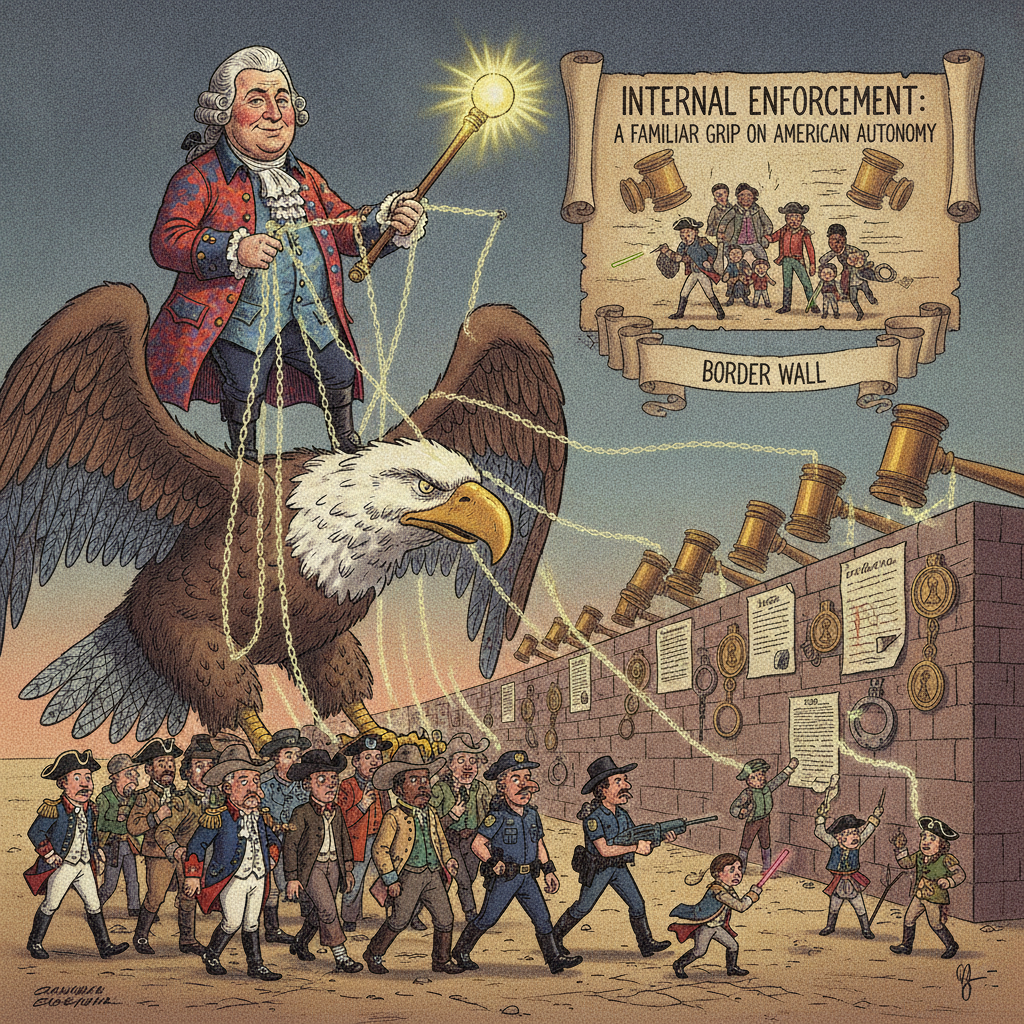
A recent report by the American Civil Liberties Union details a profound restructuring of law enforcement, transforming diverse federal, state, and local agencies into a unified, federally directed internal force for immigration enforcement.
Details:
- An expansive 50,000-person internal enforcement force, comprising federal agents, state troopers, local police, and even wildlife officers, now conducts federal immigration operations across the nation.
- This strategic deployment of diverse local authorities, effectively deputized and reimbursed by the federal executive, revives the historical specter of local peacekeepers serving a distant, centralized mandate.
- The substantial funding for this initiative, secured through reconciliation bills, has deliberately bypassed traditional congressional oversight, diminishing the legislature's historical role in fiscal accountability.
Why it Matters:
The profound federalization of law enforcement challenges the constitutional architecture defining central authority and local governance. When the executive unilaterally repurposes state and local forces with financial incentives, bypassing legislative scrutiny, the delicate balance of powers tilts. This echoes historical grievances, a pattern of central command impinging on self-determination. As the Federalist Papers once cautioned, "Executive powers had been usurped." Such a deliberate blurring of enforcement lines creates a populace uncertain of authority and accountability. Where local institutions become instruments of a distant federal agenda, communal trust erodes. Liberty transforms from a protected right into a negotiable privilege, subject to executive dictate.