
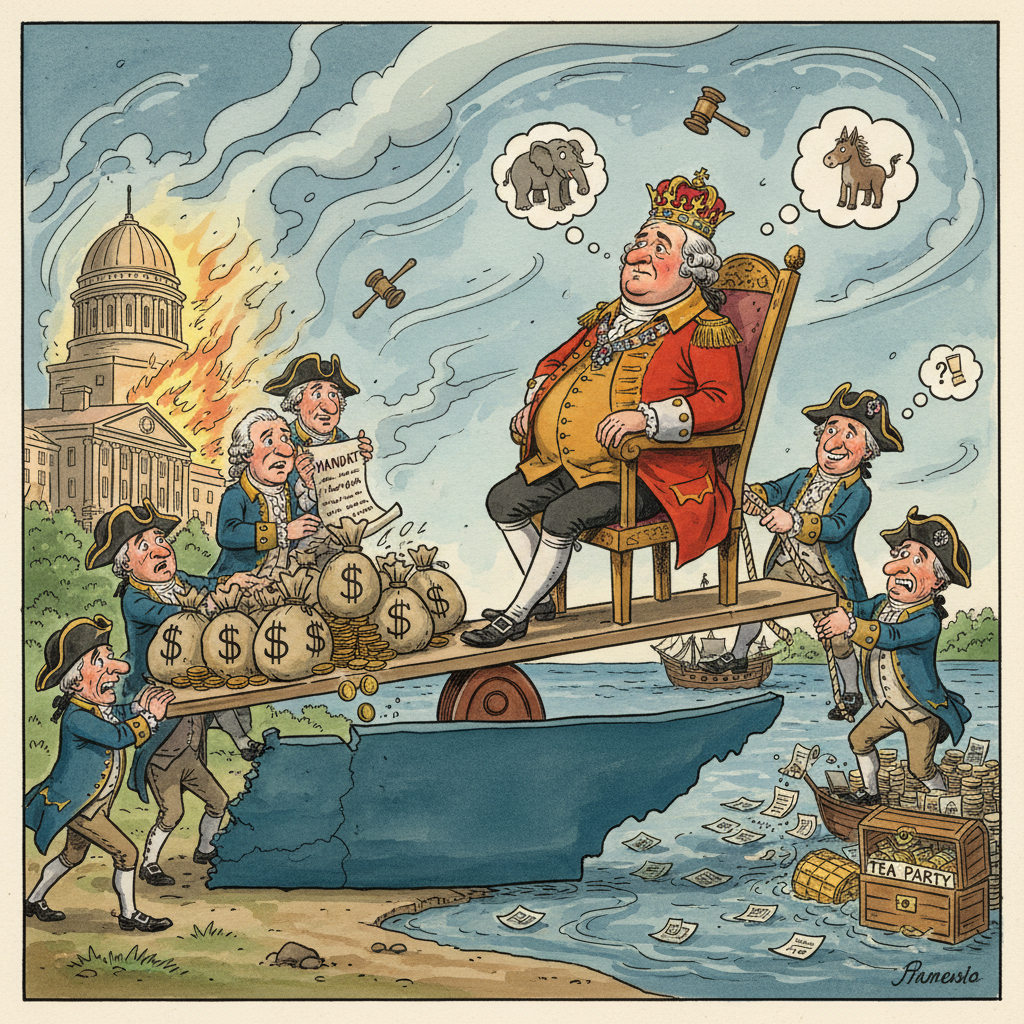
The recent special election in Tennessee, ostensibly a victory for the incumbent party, has instead offered a stark, unsettling glimpse into the precarious balance of power and public sentiment, echoing historical tensions often overlooked.
Details:
- Republicans secured a U.S. House seat in Tennessee with 54% of the vote, a narrow 9-point margin in a district Trump won by 22 points just last year.
- The victory, despite its cost of millions in campaign spending, underscores the increasingly tenuous grip of power, forcing an expensive reinforcement of what was once a secure mandate.
- President Trump's public dismissal of "affordability" concerns as a "Democrat scam," juxtaposed with his proposals for tariff rebate checks, eerily mirrors the imperial assertion that unpopular measures are "just and salutary," even as they provoke colonial discontent.
Why it Matters:
The Tennessee outcome, far from a clear triumph, reveals a weakening mandate, forcing expensive reinforcement of what was once assured. This echoes the Crown's desperate efforts to assert authority over restive colonies, where the escalating costs of control often fueled calls for independence. When leadership dismisses economic anxieties as partisan ploys and prioritizes self-preservation—via war chests and redistricting—over genuine representation, trust frays. As a colonial observer noted, "Ambitious, artful men have made the measure popular, and whatever injustice or destruction will attend it in the opinion of the colonists, at home it will be thought just and salutary." Such alienation often precedes profound, irreversible change.