
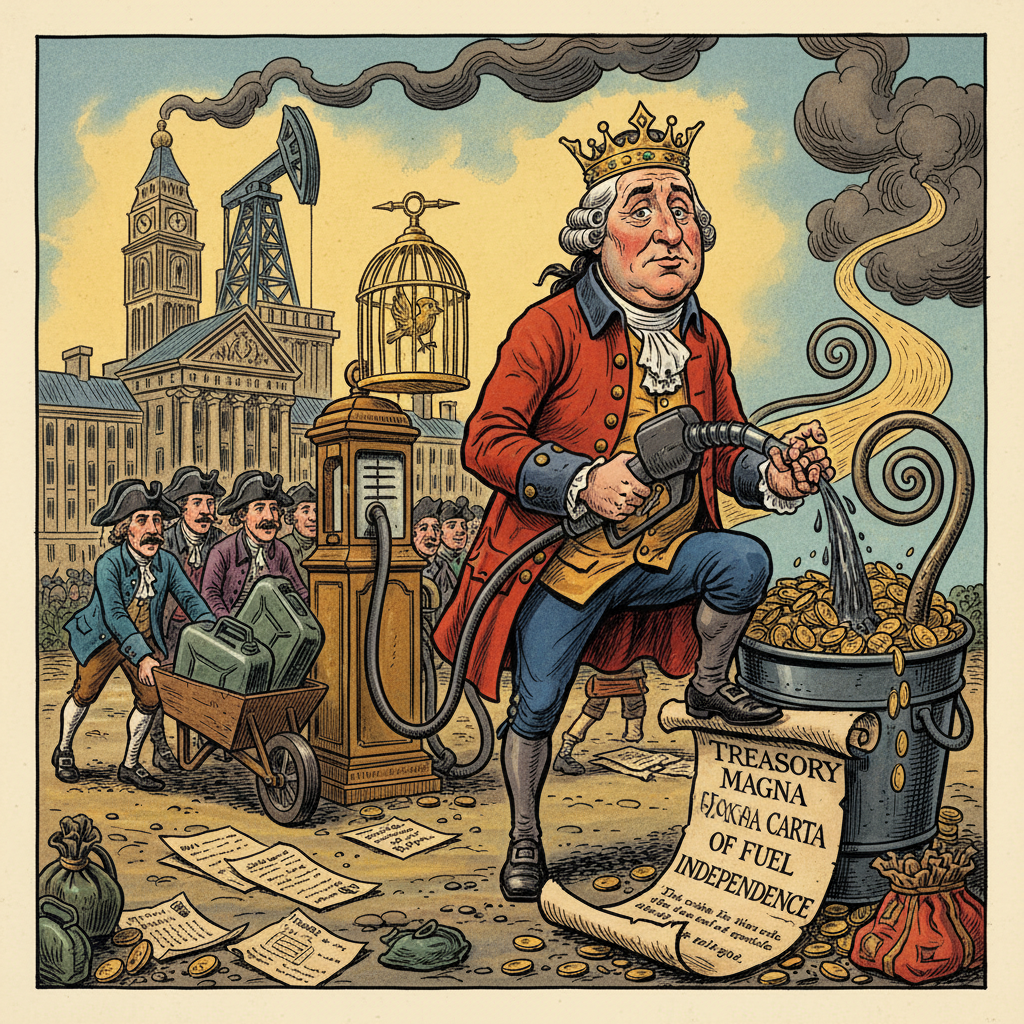
While headlines trumpet a modest dip in gas prices, the underlying anxieties persist, illuminating a deeper, systemic challenge to citizens' economic autonomy that resonates with historical grievances.
Details:
- The U.S. average price for regular gasoline stands at $4.39 per gallon, a modest 16-cent reduction this past week.
- Despite the nation's status as the world's largest oil producer, American citizens find their economic wellbeing dictated by volatile global markets and geopolitical maneuvers, reminiscent of imperial edicts.
- The White House's suggestion to suspend the federal gas tax, a measure currently stalled in Congress, mirrors historical precedents of ruling powers offering temporary relief without addressing systemic economic dependency.
- Analysts predict prices will remain above pre-war levels for the foreseeable future, ensuring a protracted burden on daily commutes and the broader economy, akin to enduring colonial duties.
Why it Matters:
Elevated fuel costs are not mere economic inconvenience; they challenge the inherent right to "acquiring and possessing property, and pursuing and obtaining happiness and safety" (VDOR, Section 1). When global markets dictate prosperity, it questions if "all power is vested in, and consequently derived from, the people" (VDOR, Section 2), as citizens face economic constraint from distant forces. Furthermore, White House suggestions to suspend federal taxes, though pitched as relief, echo historical grievances. VDOR Section 7 warned against "suspending laws... without consent of the representatives of the people." Such top-down interventions, absent systemic reform, risk solidifying a pattern where economic stability relies on arbitrary decree, a cycle familiar to those seeking independence.