
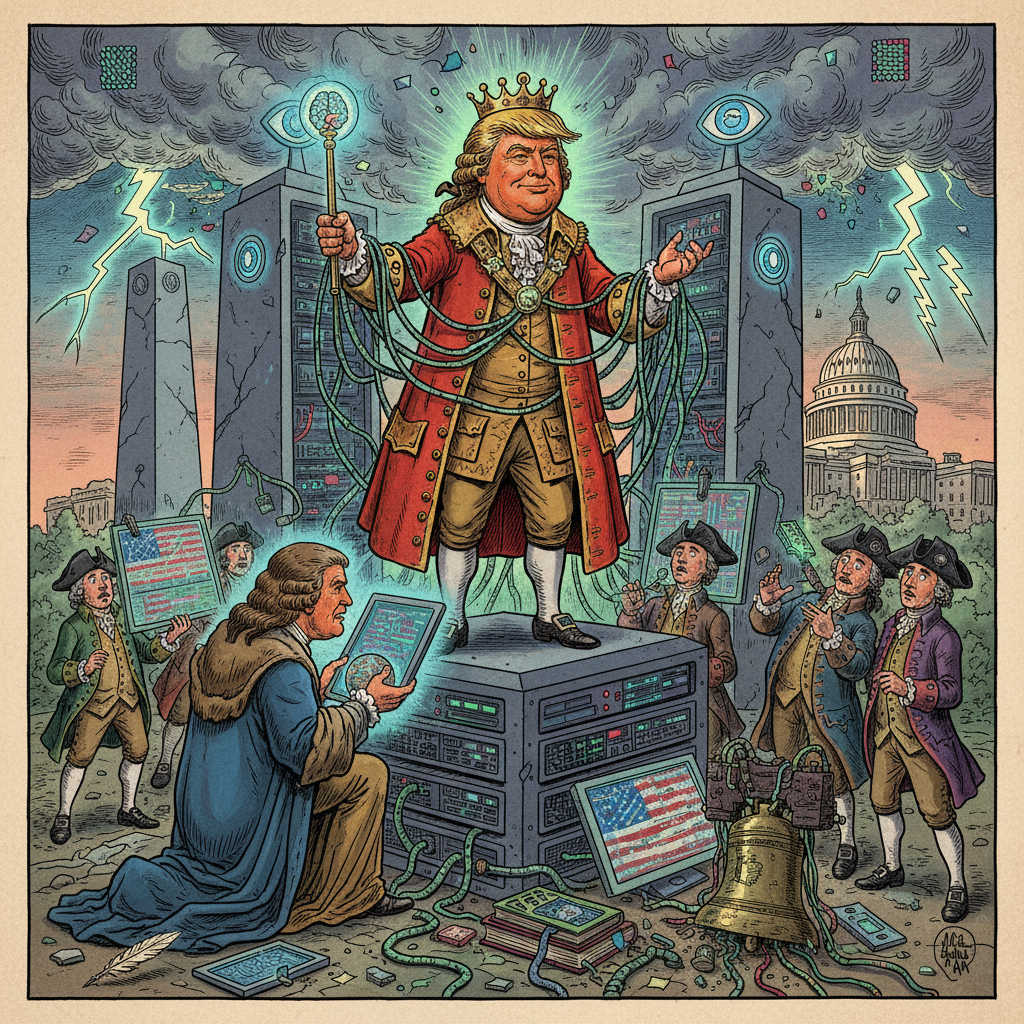
President Trump's aggressive embrace of lightly regulated artificial intelligence is not merely an economic strategy, but a profound redefinition of national sovereignty and the very architecture of governance.
Details:
- President Trump has championed a sweeping, lightly regulated expansion of Artificial Intelligence, prioritizing speed over safety concerns and embracing tech moguls.
- The administration’s moves to preempt state-level AI regulations and bypass congressional opposition echo historical attempts to override colonial self-governance.
- Internal critics, including key ideological figures, now brand this alliance between government and "broligarchs" as a new, unaccountable "crony capitalism."
- A leaked executive order threatens to tie federal funds to limitations on AI regulation, reminiscent of historical economic coercion.
Why it Matters:
The current administration's zeal for AI, manifested in executive action and intimate alliances with tech magnates, presents a fascinating echo of foundational American grievances. The rapid centralization of economic and technological power, under the pretense of national advantage, risks alienating significant portions of the populace. As the author of "THOUGHTS ON THE PRESENT STATE OF AMERICAN AFFAIRS" observed regarding the arbitrary exercise of power, the current trajectory suggests a potential for governance to become "a mere badge of distinction, or a title of plunder." This isn't merely about job displacement or market dominance; it's about the very architecture of consent. When state autonomy is challenged and the will of the people is sidelined for the rapid advancement of a select industry, the core tenets of representative governance are tested. The question shifts from economic growth to who, precisely, benefits from and truly controls the future of American society, challenging the notion of a government beholden to its constituents.