
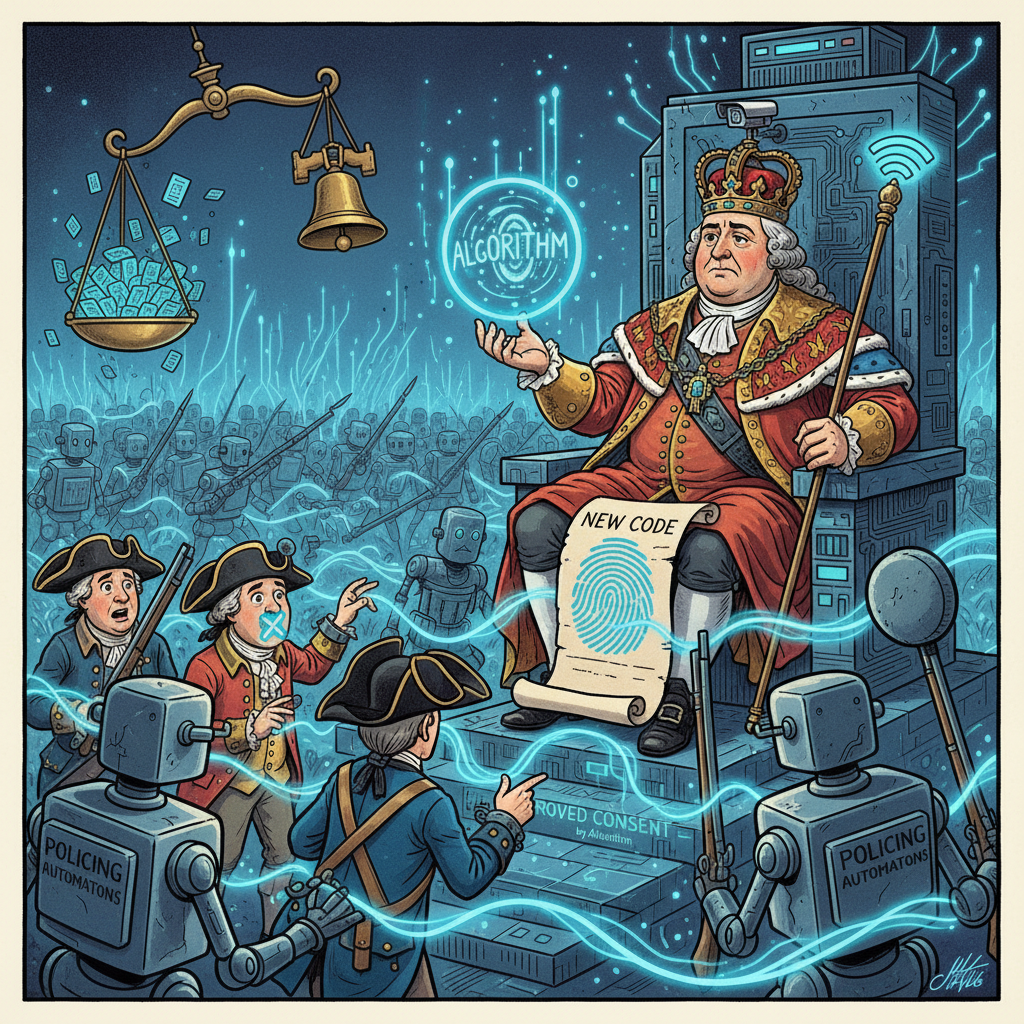
As artificial intelligence increasingly defines the landscape of American policing, its rapid proliferation without adequate public rules revives fundamental questions about governance and individual liberty.
Details:
- Law enforcement agencies are rapidly adopting generative-AI tools, like Axon's Draft One, to automate tasks such as writing police reports, purportedly saving officer hours.
- Partnerships with firms like IBM facilitate AI-driven platforms that aggregate data to predict crime patterns, establishing an unprecedented and omniscient gaze into citizen activity.
- Civil liberties advocates warn that this rapid technological spread embeds bias and obscures data control, instituting a de facto system of surveillance without public representation or understanding of its parameters.
- Austin, Texas, recently paused plans for AI-enhanced park cameras designed to "analyze behavior," signaling a rare flicker of caution against unchecked technological mandates.
Why it Matters:
The unchecked deployment of artificial intelligence within law enforcement represents a profound, contemporary echo of historical grievances regarding governance without consent. As algorithmic systems increasingly dictate the terms of public order, operating beyond robust legislative guardrails, they establish a new form of imperial oversight. This mirrors precisely the arbitrary impositions of power that figures like John Dickinson meticulously cataloged, arguing that "further" encroachments on liberty, however justified by efficiency, inevitably corrode the very foundations of self-governance. This rapid technological ascension risks not merely embedding bias, but fundamentally altering the social contract, shifting power from the governed to the code and its unrepresented architects. It is a silent revolution, where due process yields to predictive analytics and privacy dissipates under the gaze of constant digital scrutiny, fostering an environment where a population can be policed without their explicit or even implicit, representation.