
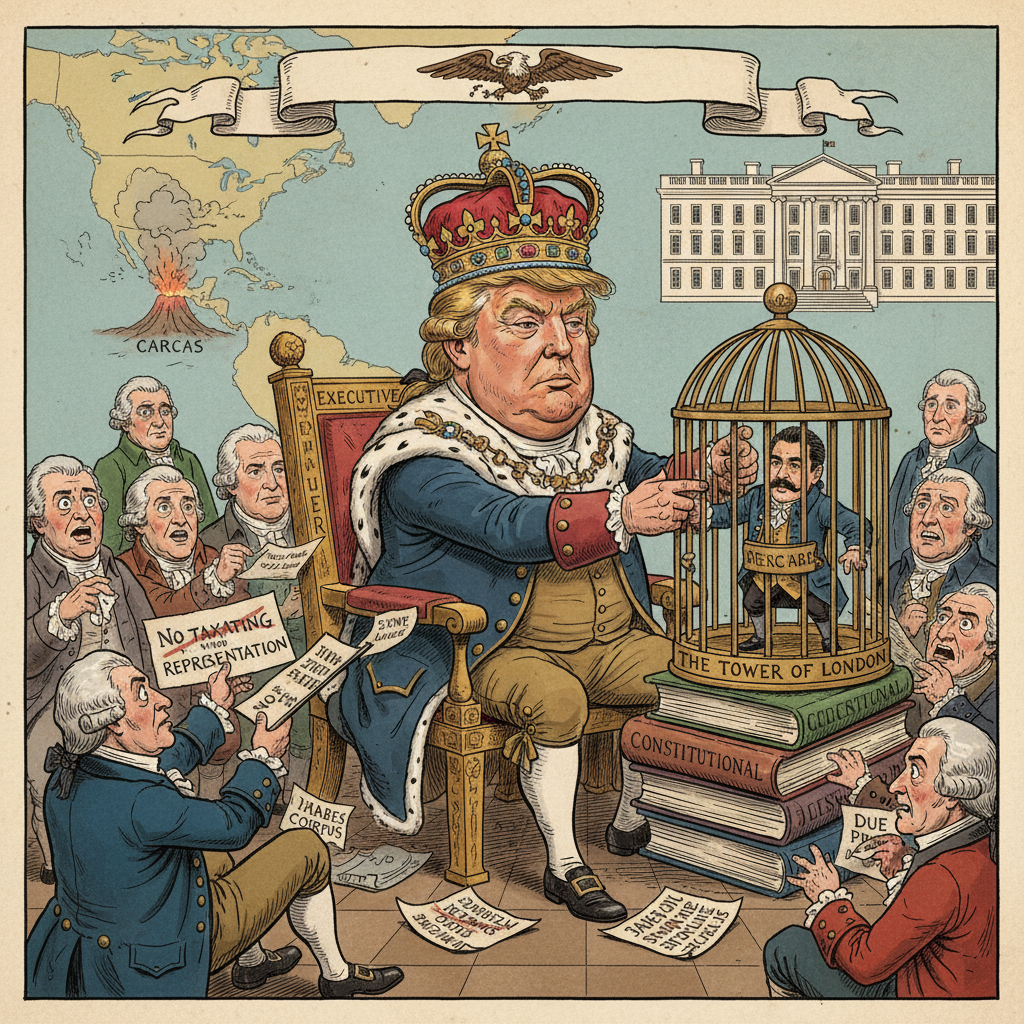
President Trump's swift, unauthorized capture of Venezuelan leader Nicholas Maduro has ignited a fierce constitutional debate, echoing fundamental struggles over executive authority that predate the republic itself.
Details:
- President Donald J. Trump ordered overnight strikes in Caracas and the capture of Venezuelan President Nicholas Maduro, proceeding without prior congressional authorization.
- Congressional Democrats immediately decried the unilateral action, asserting it circumvented Article I authority and set a dangerous precedent for targeting foreign heads of state.
- Republicans defended the move under Article II of the U.S. Constitution, framing it as the President's prerogative to protect American personnel, a recurring debate over executive power.
- The administration’s previous testimony to Congress, denying an intent to oust Maduro and promising authorization for ground operations, now stands in stark contrast to the swift mission.
Why it Matters:
President Trump's unilateral action in Caracas resurrects a foundational constitutional challenge. Bypassing legislative consent forces Congress into an "unhappy alternative"—either passively accepting or belatedly debating an action already taken. This dynamic directly echoes colonial grievances against an unchecked authority disregarding the representative body's role. This erosion of legislative authority risks normalizing presidential prerogatives beyond constitutional bounds. Such concentrated power, reminiscent of pre-revolutionary overreach, compels constant re-evaluation of government's true limits and the preservation of liberty.