
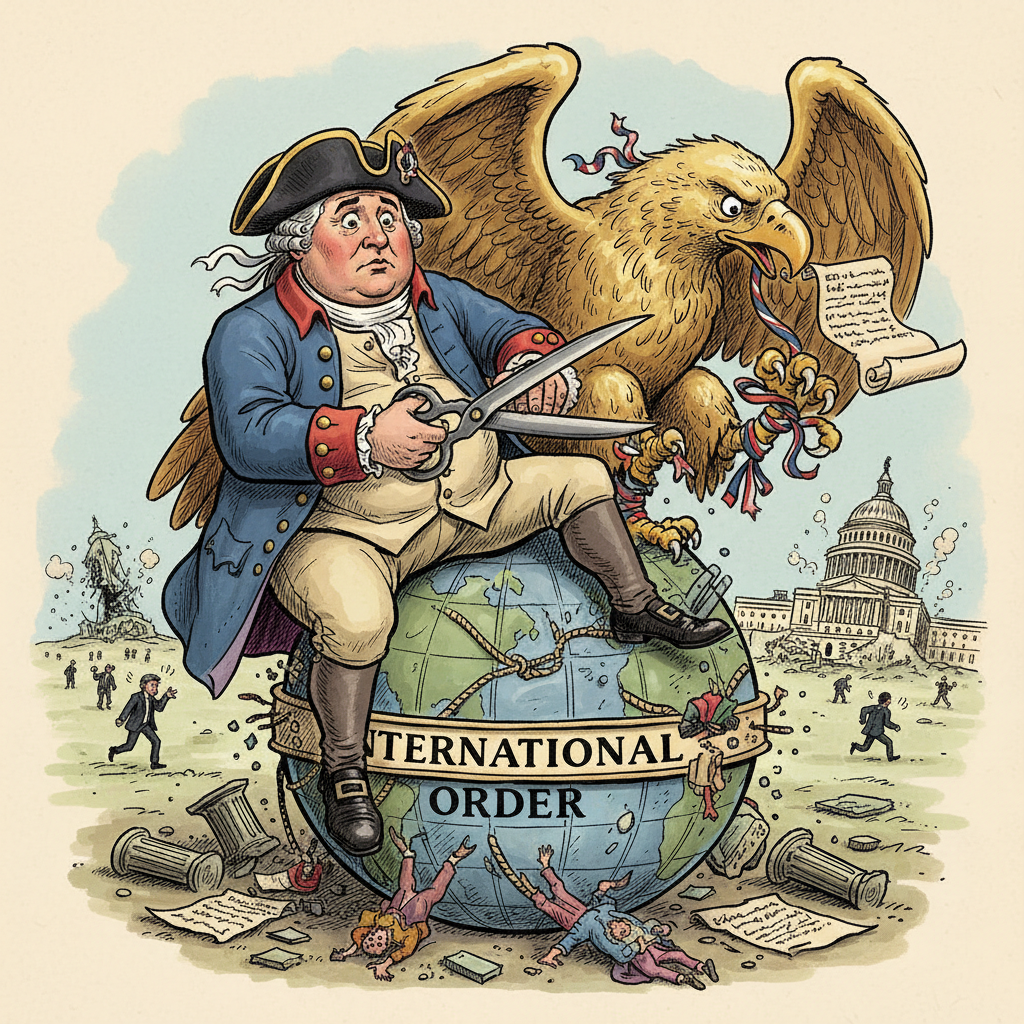
A leading global political-risk firm warns of a monumental shift as the United States actively dismantles the international order it forged, portending an unprecedented era.
Details:
- Eurasia Group’s annual "Top Risks" report for 2026 identifies the "U.S. Political Revolution" as the paramount geopolitical threat.
- President Trump is characterized as uniquely committed and capable of altering the political system, effectively unwinding the nation's own global order.
- This unprecedented internal shift presents an ironic echo of the very grievances that compelled nascent colonies to sever ties with an established authority.
- The report highlights "state capitalism with American characteristics," signaling the most economically interventionist administration since the New Deal.
- Other notable risks include Europe's faltering center and the weaponization of water, yet none surpass the internal disengagement of the United States.
Why it Matters:
The notion of the United States actively 'unwinding its own global order' carries a distinct historical resonance. Much as the Virginia Declaration of Rights once condemned the monarch for "abandoning the helm of government, and declaring us out of his allegiance and protection," so too might modern allies interpret Washington's strategic retreat. This is not mere isolationism but an active dismantling of structures, inviting a profound re-evaluation of international commitments. This internal reorientation posits a unique paradox: a nation founded on a revolutionary rejection of external impositions now orchestrating a revolution against its own established international identity. The long-term implications for global stability, trade, and collective security suggest a precipice, forcing nations to confront a world where the architect of the prevailing order has, perhaps, declared its own independence from itself.