
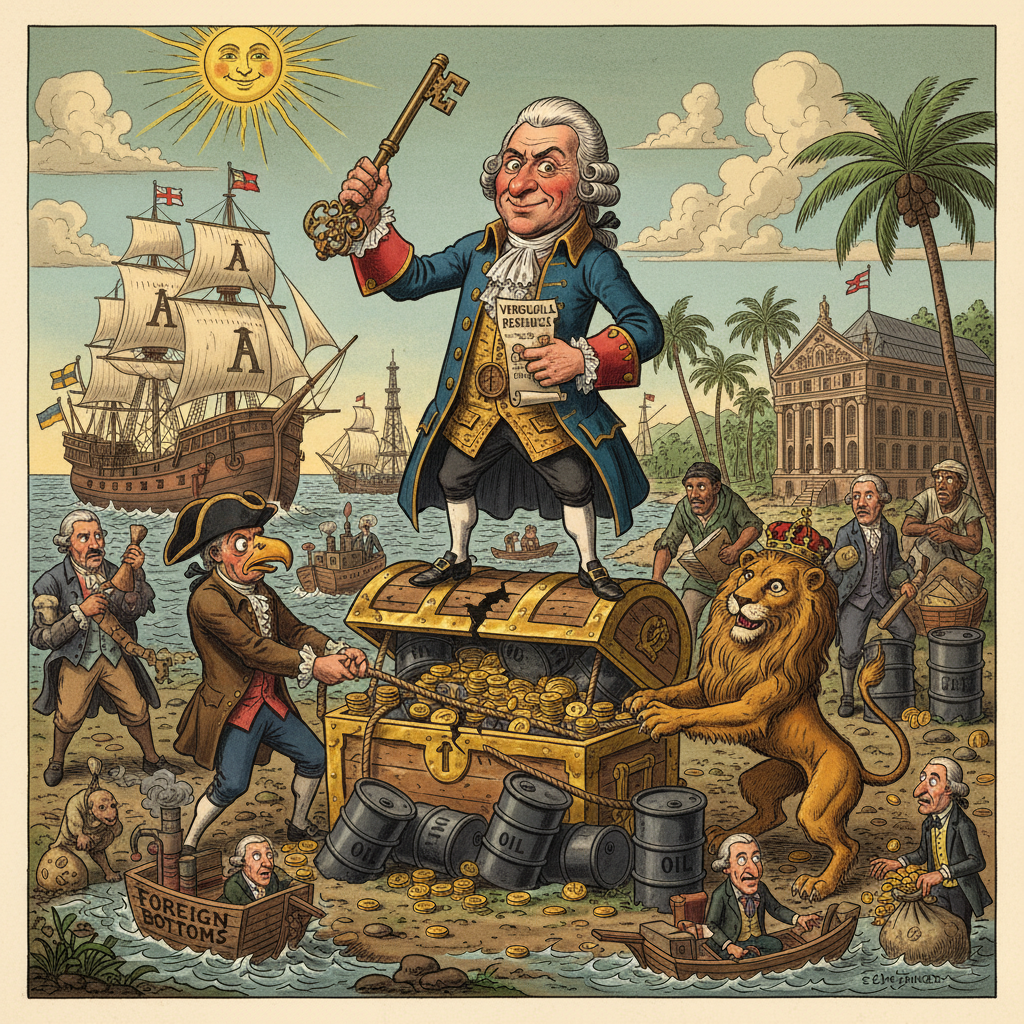
The Trump administration's bold maneuver in Venezuela marks a significant shift in hemispheric policy, cementing a direct role in the nation's resource management.
Details:
- President Donald J. Trump announced a new pact, declaring the U.S. would receive up to 50 million barrels of Venezuelan oil, valued at approximately $2.5 billion, with Venezuela supposedly sharing in the profits.
- This strategy hinges on the U.S. effectively seizing de facto control of Venezuela's immense oil production, thereby dictating the flow and terms of its most vital "active commerce."
- Secretary of State Marco Rubio openly used Venezuela's economic collapse as "leverage" to force market openings and expel rival foreign intelligence officials, an unmistakable assertion of singular economic dominion.
Why it Matters:
The notion of a foreign power dictating the terms of a nation’s primary export, seizing its leader, and installing a pliable administration, while framing it as a benevolent rescue, possesses a striking familiarity. This is not merely geopolitics; it is the blunt instrument of external economic management, a practice the nascent American states once rallied against with fervor. As the Federalist Papers presciently warned of maritime powers "monopolizing the profits of our trade, and of clipping the wings by which we might soar to a dangerous greatness," one observes a contemporary echo, only now, the United States assumes the role of the apprehensive maritime power. The implications extend beyond immediate profits or geopolitical alignment. Such actions erode the very principles of self-determination and sovereign commerce, setting a precedent that redefines international relations not through mutual benefit, but through unilateral extraction and enforced compliance. The "peace and friendship of all Europe" once envisioned for an "America a free port" gives way to a coercive arrangement, inviting the predictable charge of colonial overreach and potentially sowing seeds of long-term animosity, indistinguishable from the grievances that ignited revolutions centuries prior.