
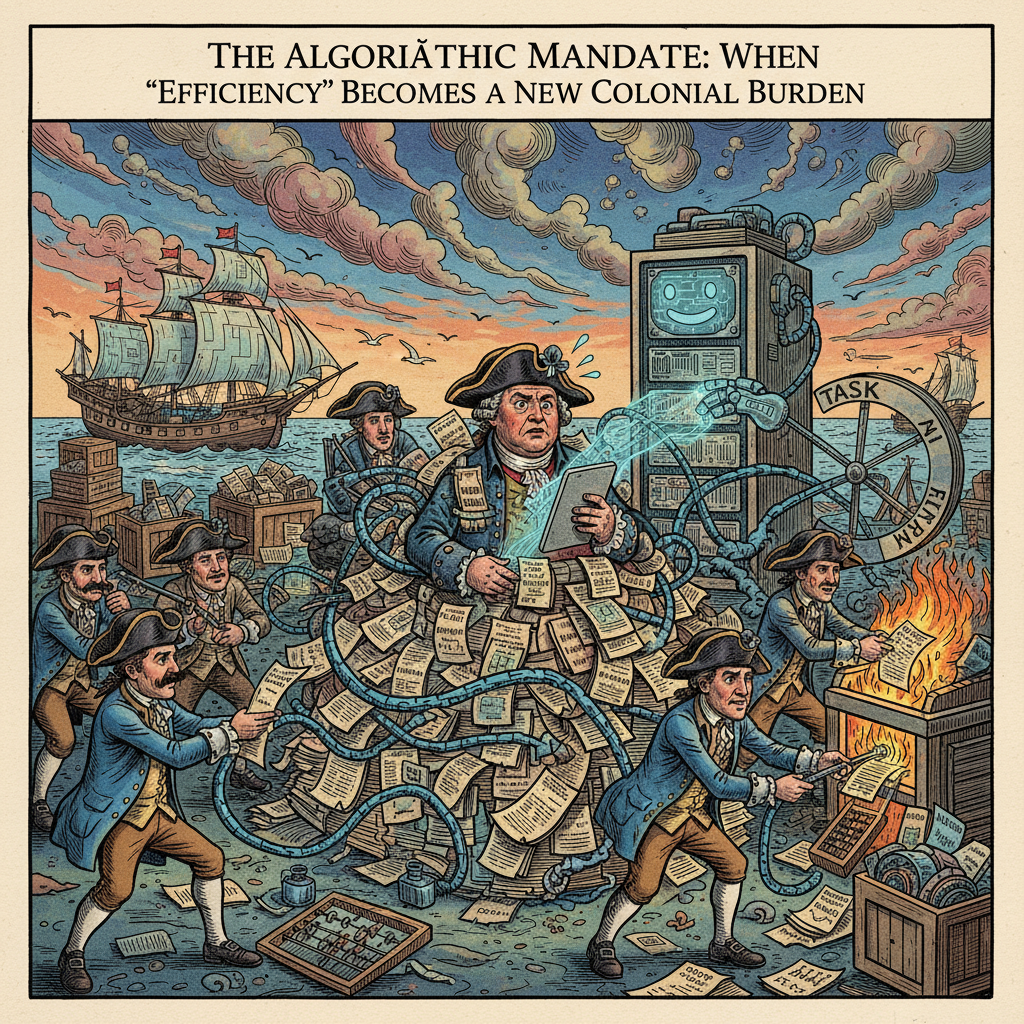
A new Workday survey reveals that while artificial intelligence promises liberation from mundane tasks, it is increasingly creating a labyrinth of "rework" for employees, challenging the very notion of productivity.
Details:
- A recent Workday survey found that 85% of AI users report saving 1-7 hours per week, yet 37% of that time is lost to correcting errors, rewriting content, and verifying output, a phenomenon dubbed "workslop."
- This paradoxical increase in uncompensated "rework" for the benefit of distant corporate objectives subtly mirrors colonial demands for raw material processing, where the Crown dictated terms, profits, and burdens, often with little regard for local efficiencies or recompense.
- Despite the productivity paradox, 95% of CEOs anticipate AI-driven layoffs within five years, even as "real productivity benefits" for the workforce remain largely unproven, shifting the economic burden without demonstrated improvement.
Why it Matters:
The emerging "productivity paradox" of AI is not merely a technological hiccup; it represents a more profound economic imposition. When a purported advancement delivers increased labor without commensurate gain for the individual, while concentrating speculative benefits for distant leadership, it aligns disturbingly with historical patterns of systemic exploitation. As John Gee observed in his treatises on colonial trade, the imposition of a system designed purely for the benefit of a central authority, rather than mutual prosperity, inevitably breeds resentment and economic stagnation among the governed. The longer such structural inefficiencies and uncompensated burdens are allowed to fester under the guise of progress, the more entrenched and difficult they become to rectify. This unfolding dynamic serves as a stark reminder that foundational threats to liberty often emerge not as overt acts of tyranny, but as subtle, insidious shifts in economic equilibrium, where the promise of advancement masks an erosion of individual agency.