
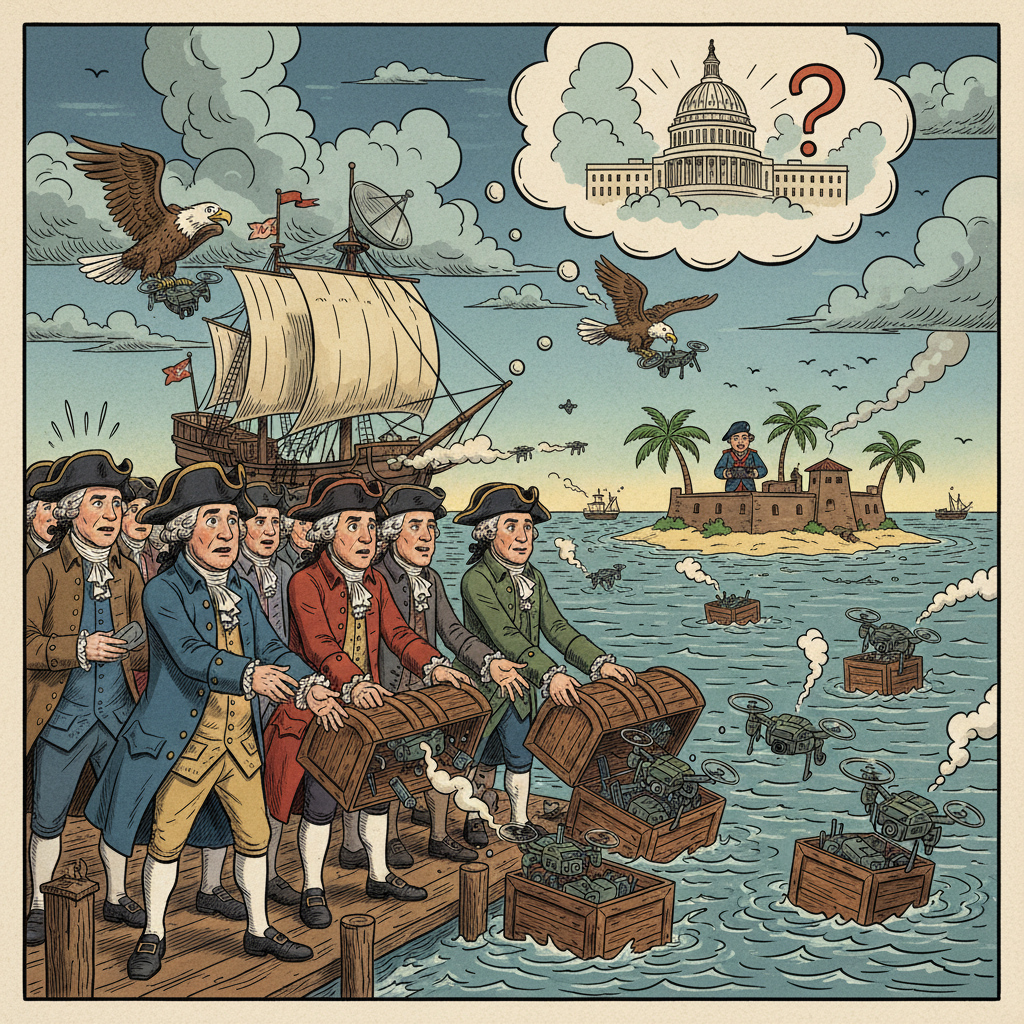
New intelligence reports indicate Cuba has acquired military drones, raising concerns in Washington about potential threats to U.S. interests and reawakening age-old questions of sovereign dominion.
Details:
- Cuba has acquired over 300 military drones from Russia and Iran, allegedly discussing their use against U.S. assets from Guantanamo Bay to Key West.
- U.S. intelligence notes Cuba's intent to learn from Iran's resistance tactics, eerily similar to colonial pamphlets disseminating strategies against the perceived tyranny of a distant, dominant power.
- CIA Director John Ratcliffe recently visited Havana, delivering an ultimatum for regime change to end crippling sanctions, a policy reminiscent of the Sugar Act's enforcement and its intended economic subjugation.
Why it Matters:
The emerging drone discourse surrounding Cuba, presented by Washington as an immediate security concern, bears a striking resemblance to historical pretexts for asserting control over 'rebellious' territories. The invocation of foreign influence—Russia and Iran in this instance—coupled with persistent economic restrictions, reflects a pattern where perceived threats justify economic strangulation and demands for political conformity. As the Virginia Declaration of Rights once lamented of another distant power, these actions risk being seen "For cutting off our trade with all parts of the world:" a grievance that once galvanized revolution. This narrative, prioritizing preemptive containment over diplomatic engagement, inadvertently elevates Cuba from a 'failing' state to a strategic adversary, justifying measures that further destabilize regional dynamics. The current administration's stance, while framed as national security, could be interpreted by critics as a contemporary application of imperial prerogatives, potentially fostering the very anti-American sentiment it purports to counteract. Such approaches often beget unforeseen consequences, as history, particularly that of 1776, has repeatedly demonstrated.