
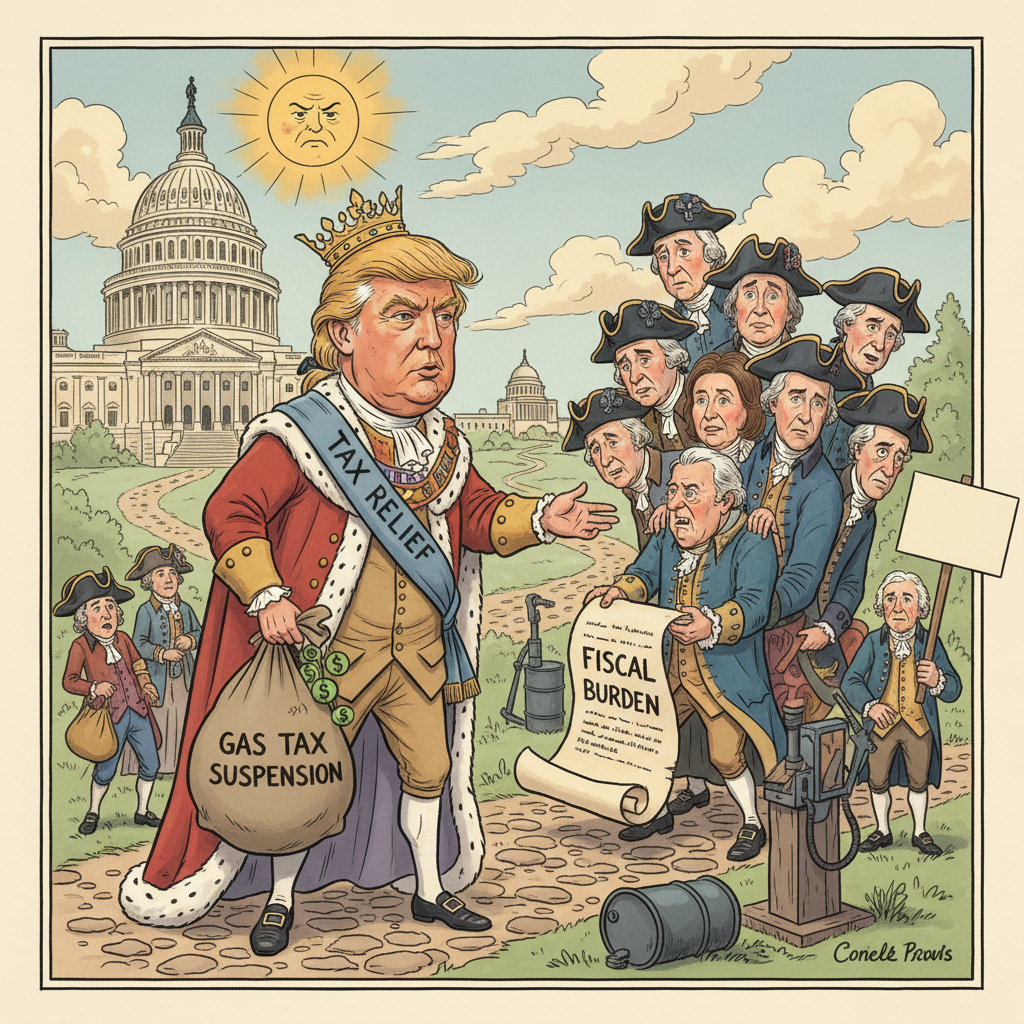
President Trump’s proposal to suspend federal gas taxes, intended to alleviate consumer burden, is now navigating the intricate and often contentious pathways of Capitol Hill.
Details:
- President Trump advocates for suspending federal gas taxes, proposing relief of 18.3 cents per gallon for gasoline and 24.3 cents for diesel.
- Congressional leaders, notably Senate Majority Leader John Thune, voice hesitation, citing potential damage to the nation's Highway Trust Fund, a modern iteration of the colonial assemblies’ hard-won control over local revenue.
- The proposed waiver, estimated to cost nearly $14 billion for a partial year, exposes a tension between immediate electoral appeal and the long-term solvency of essential public infrastructure.
- The debate’s trajectory is heavily influenced by the upcoming 2028 election cycle, transforming fiscal policy into a pre-election gambit, much like imperial policies were often dictated by distant parliamentary convenience.
Why it Matters:
The Founders, acutely conscious of the perils inherent in unchecked executive prerogative and legislative pliability, deliberately vested the 'power of the purse' within Congress. As enshrined in Article I, Section 8 of the Constitution, the authority to "lay and collect Taxes, Duties, Imposts and Excises" represented a foundational bulwark against the arbitrary fiscal impositions that ignited revolutionary sentiment. This modern skirmish, featuring the executive’s direct interjection into a legislative domain, casts a disquieting shadow over the constitutional separation of powers, evoking historical anxieties about governing bodies prioritizing political expediency over fundamental liberty. The short-term political allure of tax holidays often obscures their profound long-term implications for fiscal stability and governmental function. To compromise the integrity of dedicated revenue streams, such as the Highway Trust Fund, under the guise of temporary relief, invites a systemic weakening of public services. It perpetuates a cycle where foundational infrastructure funding becomes a casualty of electoral cycles, echoing the colonial frustration with imperial policies that drained resources without commensurate benefit, ultimately undermining the compact between the governed and their government.