
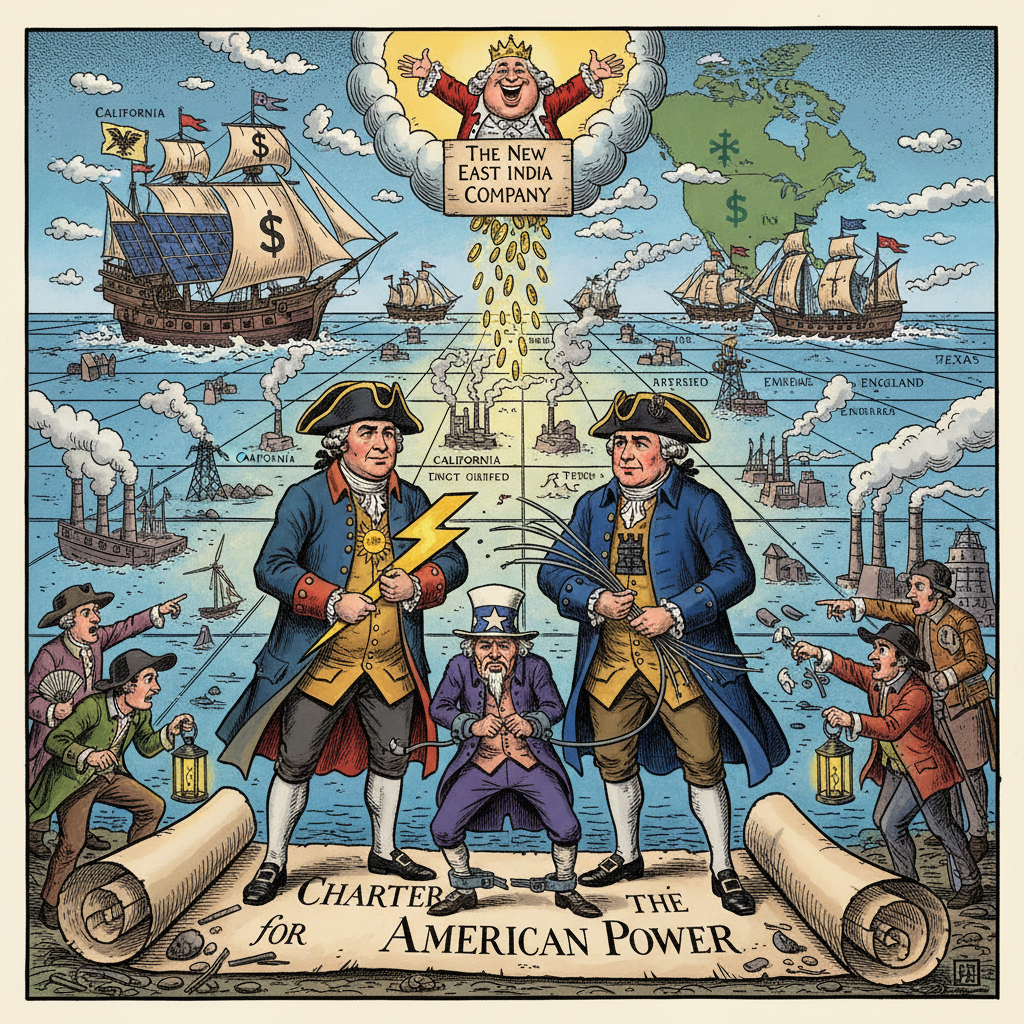
Two energy titans, NextEra and Dominion, announced a monumental merger this week, poised to consolidate unprecedented control over the nation's vital electricity grid.
Details:
- The combined entity would serve approximately 10 million customer accounts, spanning Florida to the Carolinas, establishing the largest regulated electric utility by market capitalization globally.
- This unprecedented consolidation of power over essential infrastructure mirrors the Crown's historical granting of monopolistic charters to favored companies, extracting wealth and dictating terms without local accountability.
- Proposed customer bill credits, totaling $2.25 billion over two years, recall the symbolic gestures offered by distant authorities designed to quell dissent rather than address systemic imbalances of power.
Why it Matters:
The NextEra-Dominion merger presents a constitutional challenge to corporate power in a republic. The American Revolution's grievances stemmed from control over essential services and authority beyond the governed. The Virginia Declaration of Rights, Article 8, states, "that no man be deprived of his liberty, except by the law of the land, or the judgment of his peers." This economic liberty is subtly eroded when vital utilities become vast, unchallengeable entities, operating with diminished local accountability or popular consent. The promise of "efficiency" and "scale" echoes historical assurances used to justify royal prerogatives and corporate charters that stifled colonial self-determination. The "friends of America" understood that unchecked power, whether monarchical or corporate, inevitably subjugates local interests to its grand designs. The question remains: does the contemporary regulatory apparatus possess the historical memory or will to recognize a familiar threat in a new guise?