
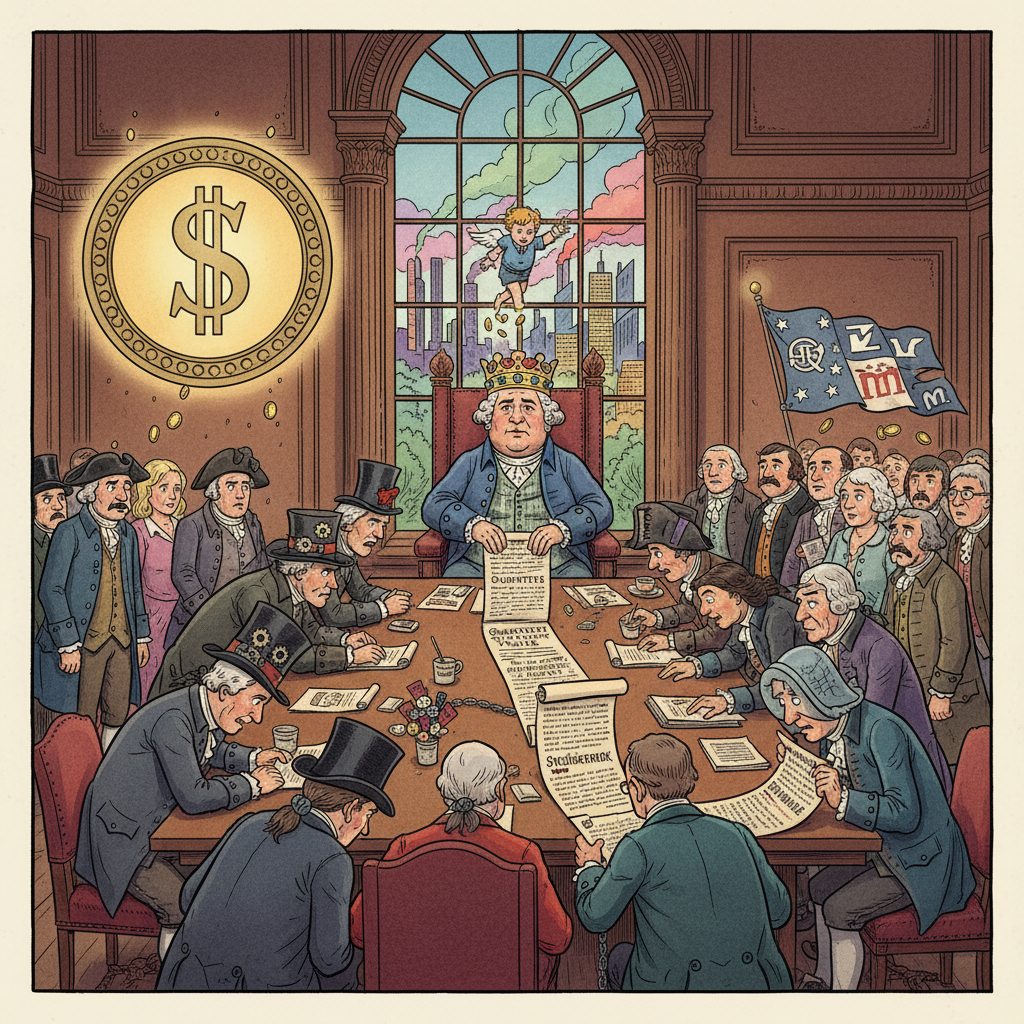
In an era marked by unprecedented material abundance, a profound societal disquiet has taken root, threatening the very foundations of American exceptionalism.
Details:
- Despite objective metrics like soaring wealth, plummeting crime, and extended life expectancy, consumer sentiment registers a half-century low and trust in every major institution plummets.
- Leading figures propose that CEOs and business leaders are "uniquely suited to step up and help fill the trust void," effectively positioning private enterprise as the new arbiters of national cohesion.
- The fragmentation of shared reality into infinite "information bubbles" has left a "Rattled Generation" perpetually calculating whom to trust, reminiscent of a populace deprived of reliable information from its governing authority.
- The erosion of community bonds and traditional institutions, coupled with the algorithmic amplification of dissent, echoes the colonial experience of feeling disconnected from, and unheard by, a distant and unresponsive power structure.
Why it Matters:
The contemporary turn towards corporate leadership to mend a fractured social fabric, while perhaps pragmatic in its intent, subtly reconfigures the very compact upon which this nation was founded. It represents a quiet ceding of the public's right to self-governance, echoing the precise grievances that once stirred the colonies to rebellion. When trust in representative institutions evaporates, the vacuum is invariably filled, often by entities unaccountable to the ballot box. As Thomas Paine observed in "Common Sense," "Government, like dress, is the badge of lost innocence; the palaces of kings are built upon the ruins of the bowers of paradise." To seek salvation from an unelected corporate elite, rather than reinvigorating the mechanisms of democratic accountability, risks exchanging one form of distant, unassailable authority for another. The ultimate price of a "rattled generation" may not be economic decline, but a profound amnesia regarding the hard-won principles of popular sovereignty.