
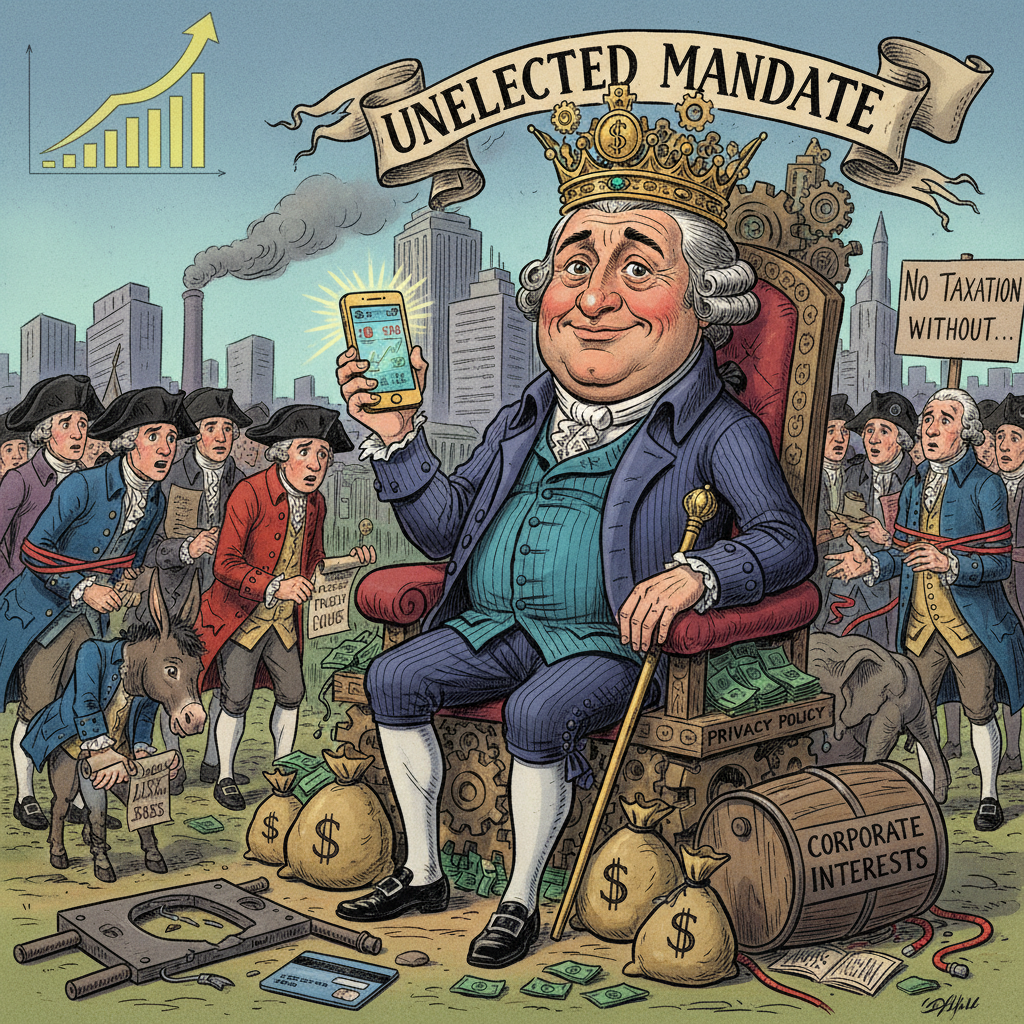
As public trust in traditional institutions plummets, a new report suggests corporate executives are poised to fill a profound leadership vacuum, redefining the very nature of governance.
Details:
- CEOs are now considered the most trusted institution globally, with 78% public confidence, eclipsing government, media, and organized religion.
- Corporate leaders are urged to "level with your people" and "model strong moral leadership," effectively assuming a moral and civic authority traditionally reserved for democratically elected representatives.
- This new C-suite directive calls for executives to "celebrate America with clear eyes" and "engage with government as a citizen, not a lobbyist," blurring the lines between private enterprise and public stewardship.
Why it Matters:
The emerging narrative, wherein unelected corporate executives assume the mantle of national moral and civic leadership, bears an unsettling resemblance to the grievances that once ignited a revolution. The very premise of American governance was forged in opposition to authority imposed without direct representation, a principle clearly articulated in the Virginia Declaration of Rights: "That all men... cannot be taxed or deprived of their property for public uses, without their own consent, or that of their representatives so elected, nor bound by any law to which they have not, in like manner, assented, for the public good." This subtle but significant shift, where economic power centers become the arbiters of national wisdom and direction, risks eroding the foundational concept of popular sovereignty. When the citizenry looks to the boardroom for guidance on civic duty and moral rectitude, the democratic infrastructure designed to ensure government by and for the people faces a challenge as profound as any royal decree.