
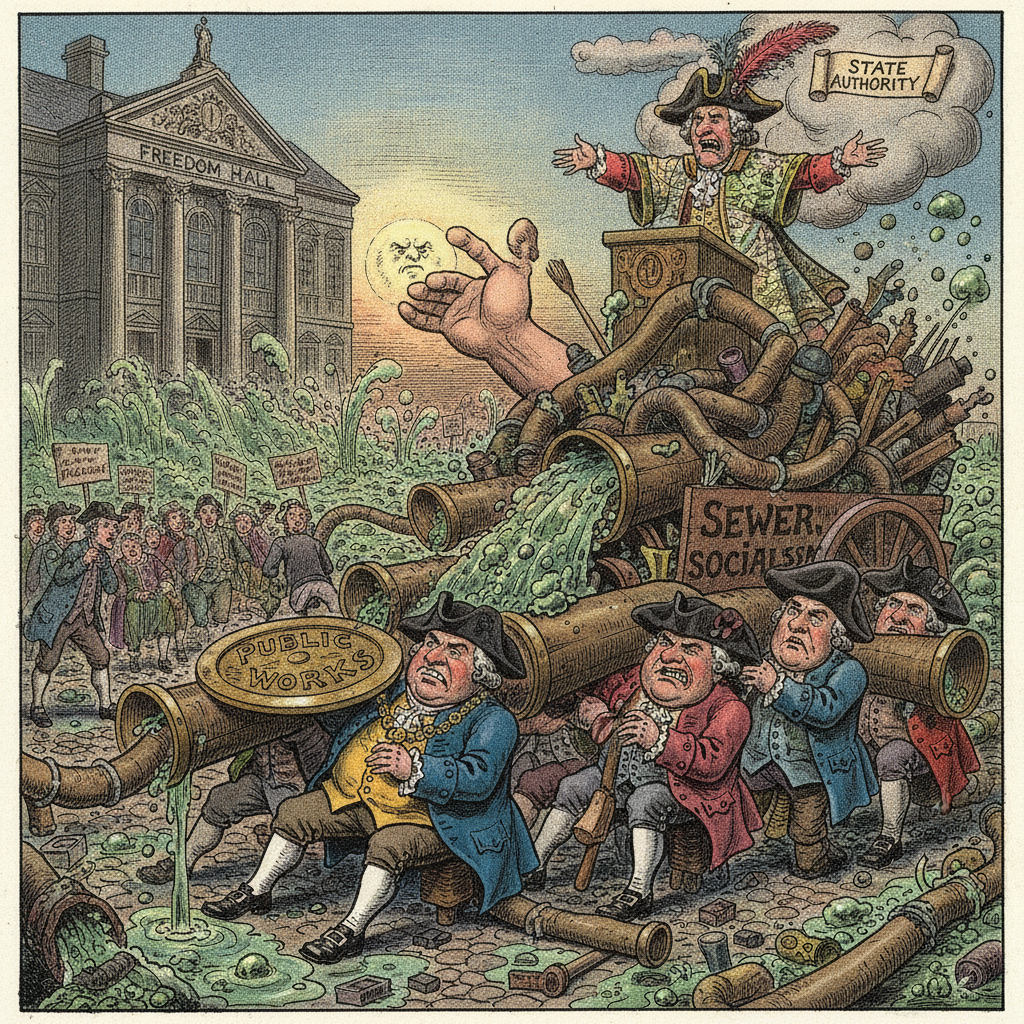
America's cities are witnessing a dramatic expansion of governmental reach into the daily lives of citizens, a phenomenon dubbed "sewer socialism," sparking conversations about civic duty and state authority.
Details:
- "Sewer socialism" advocates propose vast expansions of government programs for housing, childcare, and transportation, citing urgent affordability crises.
- This systematic expansion of state services, ostensibly for collective well-being, paradoxically revives debates on colonial-era impositions "for the greater good."
- A significant 67% of college students now view "socialism" positively or neutrally, indicating a profound ideological shift from the nation's individualist origins.
- The Democratic Socialists of America's membership surge to 110,000 highlights a growing embrace of pervasive government intervention in daily civic life.
Why it Matters:
The contemporary embrace of "sewer socialism" presents a profound challenge to the foundational principles of American liberty. While proponents emphasize communal benefits, the systematic expansion of centralized authority into daily life echoes the very grievances that ignited the American Revolution. As John Dickinson articulated, "They who feel the benefit, ought to feel the burden." This ideological pivot, especially among younger demographics, signals a profound redefinition of freedom. If the state becomes the primary arbiter of well-being, the delicate balance between government power and individual liberty shifts irrevocably. This movement, while local, carries the historical weight of a nation once fiercely resistant to even well-intentioned, distant administrative oversight.