
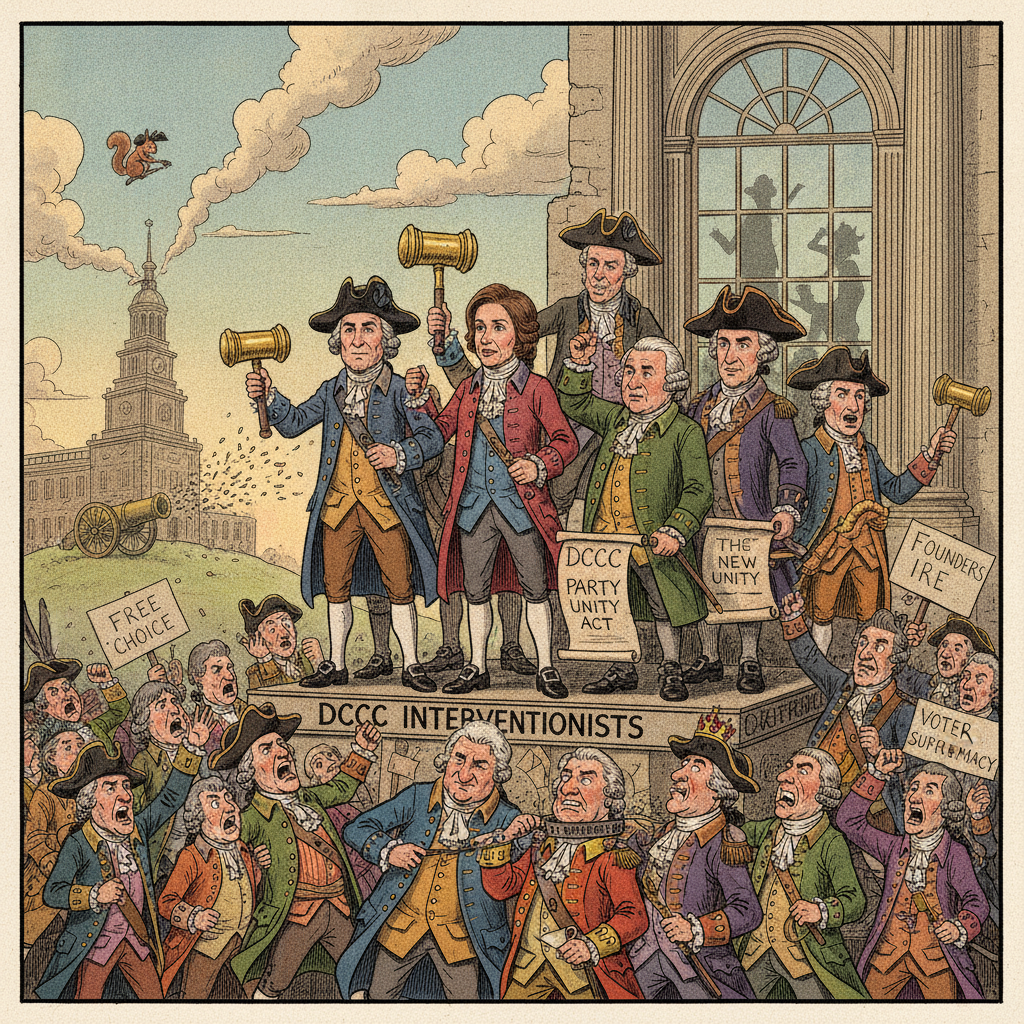
Amidst the clamor of primary season, a subtle, yet profound, shift in the architecture of party power has drawn comparisons not merely to recent history, but to the very genesis of American political thought.
Details:
- Democratic Congressional Campaign Committee (DCCC) endorsements faced significant voter backlash, leading to upset victories for progressive challengers in California and Maine.
- The DCCC's "Red to Blue" designation, ostensibly designed for general election support, has functioned as a de facto royal writ, granting favor and resources to preferred candidates in contested primaries.
- Outsider candidates and their campaigns have deftly leveraged this intervention, framing DCCC-backed opponents as "handpicked" by an "out-of-touch group" in Washington, D.C., thereby tapping into palpable anti-establishment sentiment.
Why it Matters:
The current primary season, far from mere intra-party squabbling, profoundly challenges American self-governance. A centralized party apparatus dictating local representation via financial leverage and endorsement directly echoes the grievances that galvanized the American Revolution. The perception of a 'rigged' process, where distant patrons select candidates over local will, directly violates 'the plain rules of ancient Liberty'. Such interventions, though defended as pragmatic, risk alienating the electorate and eroding trust. This dynamic, reminiscent of colonial frustrations with an unresponsive Parliament, suggests even democratic institutions can, through overreach, inadvertently undermine their legitimacy. This invites anti-establishment fervor, questioning the very definition of a true representative republic.