
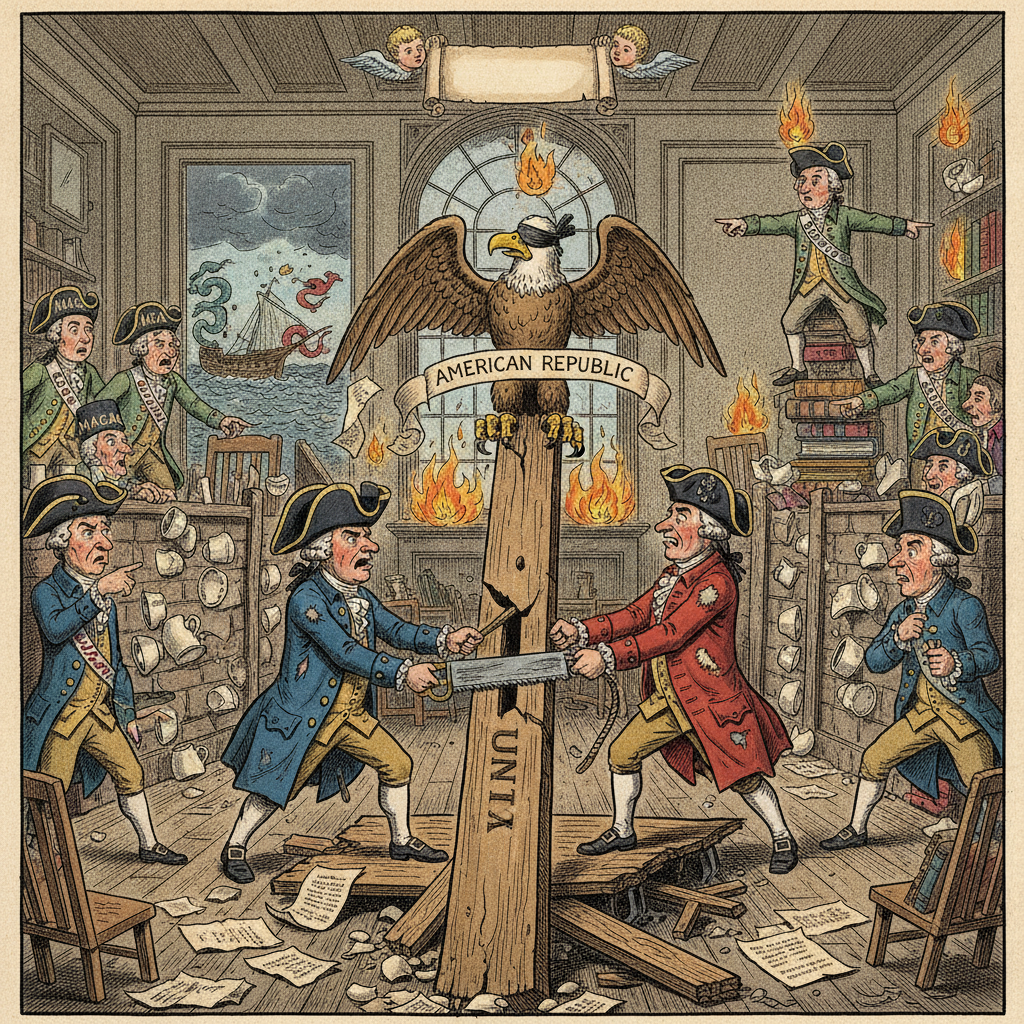
Amidst a landscape of unprecedented political fragmentation, the United States finds itself wrestling with the very foundational questions of unity and governance that once sparked its inception.
Details:
- President Trump's popularity remains locked around 60% unpopularity, as former MAGA allies Tucker Carlson and Marjorie Taylor Greene renounce the GOP over foreign policy.
- Amidst this, a growing clamor for a 'Continental Congress' of AI labor unions and anti-interventionist blocs suggests a burgeoning desire for entirely new articles of association.
- The perceived ‘tyranny’ of establishment parties and foreign policy consensus has led a new generation to embrace 'socialism' with revolutionary zeal, mirroring colonial resistance to imperial control.
Why it Matters:
The current political maelstrom transcends mere partisan squabbles, signaling a profound crisis of public fidelity. As George Washington sagaciously warned, factionalism 'serves always to distract the public councils and enfeeble the public administration.' This echoes early colonial disunity, eroding any pretense of national cohesion. Such sustained disarray inevitably leads to a 'diminution of attachment and reverence which steals into the hearts of the people, towards a political system which betrays so many marks of infirmity.' The American experiment faces a stark choice: cohere or devolve into contentious constituent parts, much as the colonies once struggled before unity.