
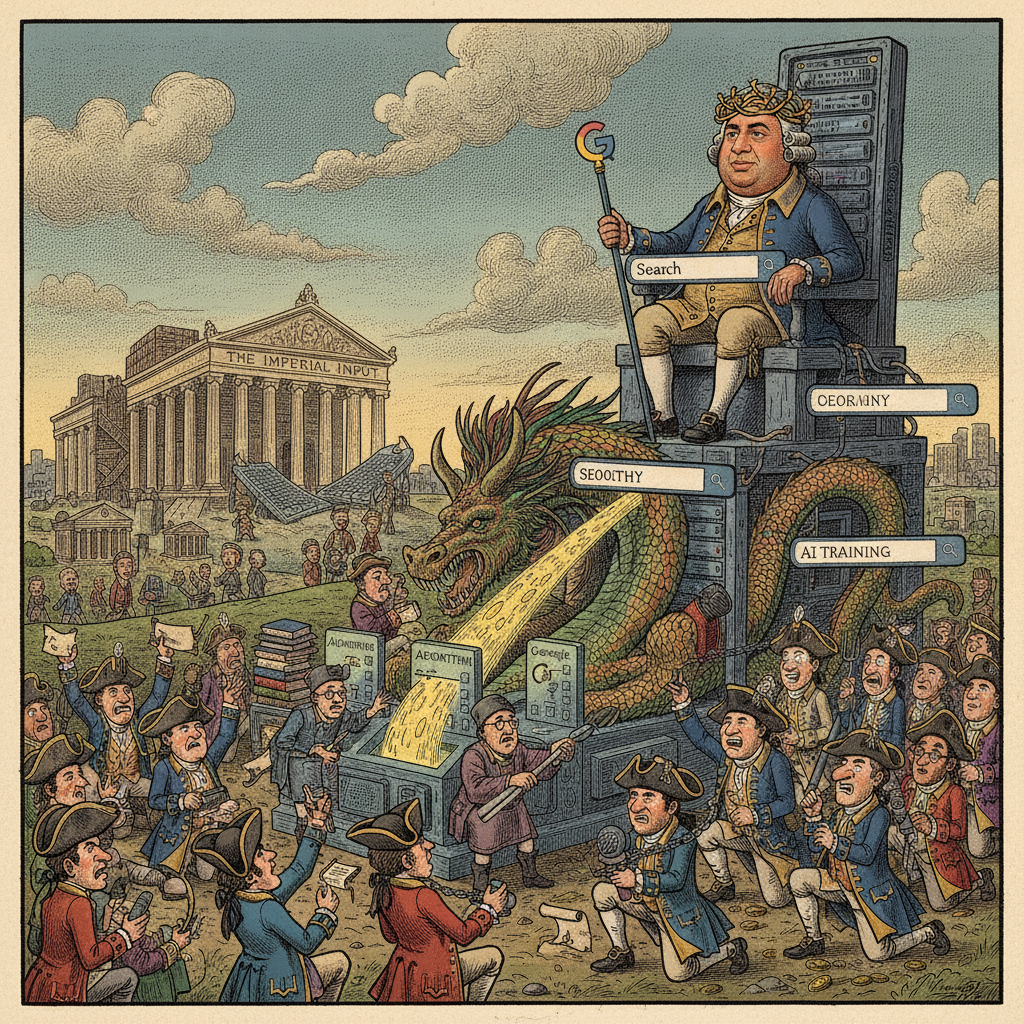
A prominent publishing CEO has accused technology giant Google of leveraging its dominant market position to dictate terms for content consumption and AI training, igniting concerns over digital autonomy.
Details:
- People Inc. CEO Neil Vogel has publicly accused Google of exercising "incredible abuse of market power" by employing a single web crawler for both search indexing and AI model training.
- This unified approach effectively compels content creators to permit AI scraping or risk losing critical search traffic, a digital Hobson's Choice reminiscent of colonial merchants forced into exclusive trade with favored royal companies.
- The dispute highlights a profound power imbalance, where the very "inputs" essential for the next generation of digital enterprise are being extracted and repurposed without independent negotiation, echoing historical grievances over resources and economic sovereignty.
Why it Matters:
The growing friction between content producers and platform behemoths like Google represents more than a commercial dispute; it is a fundamental challenge to the notion of digital sovereignty. Just as a burgeoning colonial economy once chafed under the arbitrary edicts of a distant parliament, modern content creators confront a powerful entity whose algorithms and infrastructure effectively serve as the new regulatory framework. This dynamic raises critical questions about fair compensation and the right to control intellectual property in an ecosystem increasingly dominated by a few Goliaths. The historical precedent for such concentration of power is clear, and its lessons stark. When the flow of goods – or, in this case, information – is controlled by a single, self-interested entity, the potential for grievance and eventually, outright confrontation, amplifies. The current accusations point to a structural imbalance, where the very act of seeking information inadvertently fuels a system that may, in turn, exploit its creators. This isn't merely about revenue splits; it's about the foundational principles of a free market of ideas and the autonomy of those who cultivate them.