
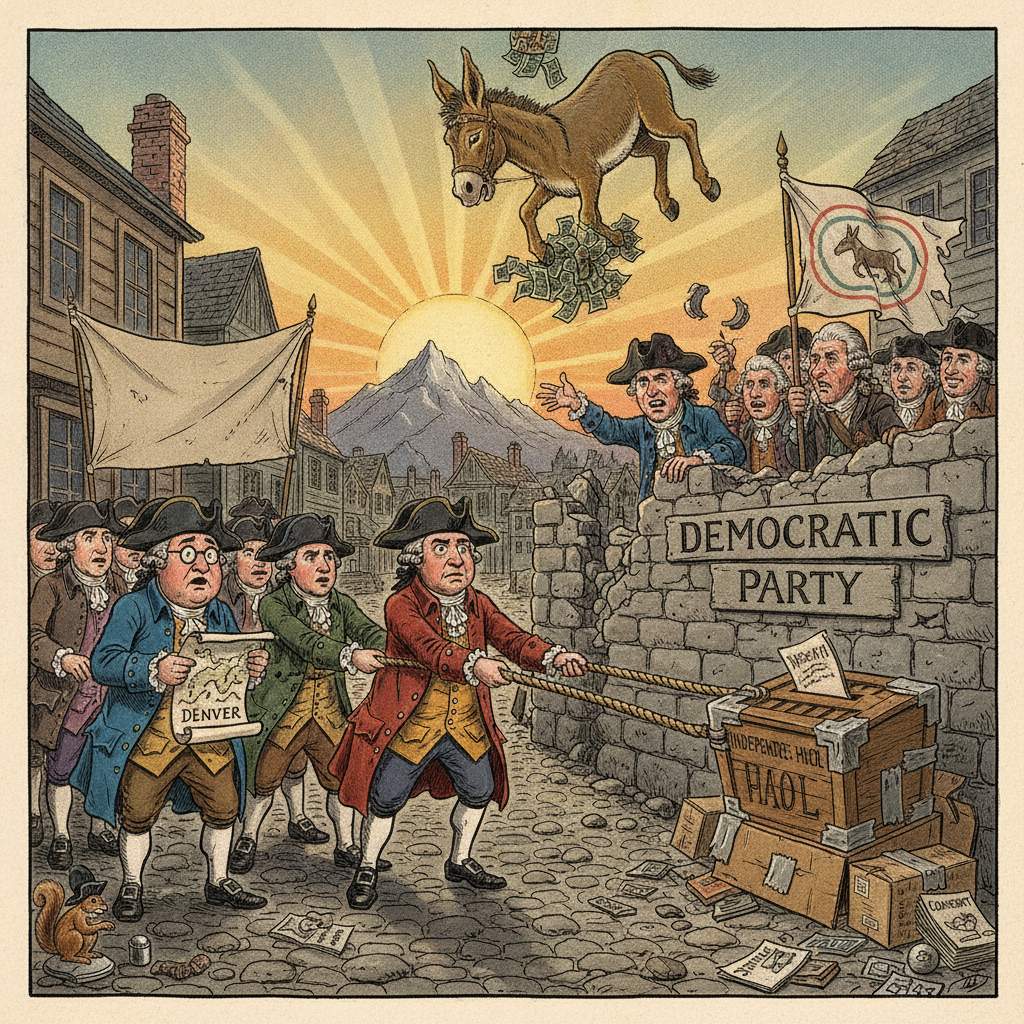
The recent series of primary defeats for entrenched Democratic incumbents across the nation signals a profound shift, one that history suggests may be less about internal party squabbles and more about fundamental questions of consent.
Details:
- Rep. Diana DeGette's decisive primary loss to 29-year-old Melat Kiros, by nearly 10 percentage points, has sent tremors through the House Democratic caucus.
- This 'wake-up call' for incumbents, dismissed by some as 'performative politics,' mirrors the Crown's classification of colonial assemblies' petitions as 'impertinent' rather than legitimate grievances.
- Despite significant funding from establishment groups, voters consistently chose challengers, indicating a preference for a perceived 'actual' voice over a 'virtually' represented one, a debate familiar to 18th-century North America.
Why it Matters:
The current disquiet among Democratic leadership, exemplified by the DeGette defeat, transcends mere factional disputes. As James Madison articulated in the Federalist Papers concerning the House of Representatives, the strength of a republic rests on the representatives' 'sympathy with the people.' When senior members are perceived as disconnected, or their 'progressive bona fides' are insufficient for a new generation of voters, the very efficacy of that consent is called into question. This isn't just about winning elections; it's about the legitimacy of the governed. The long-term implication is not merely a realignment of party power, but a re-examination of representation itself. Should this trend continue, the 'appetite for newer, younger blood' could escalate from a primary challenge to a more fundamental questioning of the established political order. History teaches that such a dynamic, if left unaddressed, can lead to declarations of independence – whether from an empire or from a political establishment perceived to have strayed too far from the popular will.