
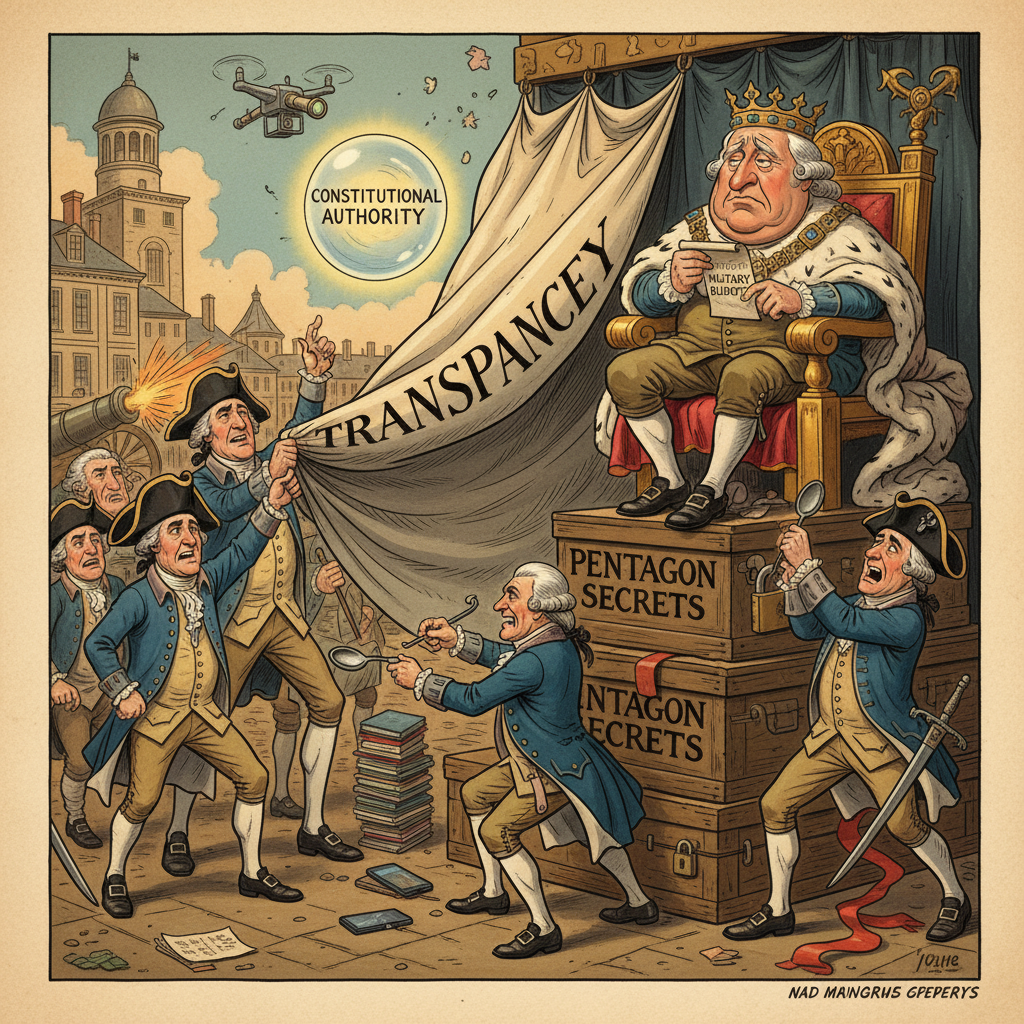
A modern dispute over military transparency has dredged up foundational questions of executive authority, compelling Congress to confront a dilemma not unfamiliar to the architects of the American republic.
Details:
- House Democrats demand release of video depicting U.S. strikes on a Venezuelan boat, including a follow-up strike on alleged survivors.
- This demand for public record, reminiscent of colonial assemblies seeking accountability for Royal Governor's expenditures, is met with the customary silence of authority.
- Lawmakers describe viewing footage of "unarmed, shipwrecked individuals" in "clear distress," leading some to call for Secretary of Defense Pete Hegseth's resignation.
- President Trump's earlier assurances of "no problem" with release now stand in stark contrast to the Pentagon's non-response to congressional inquiry.
Why it Matters:
The core of representative government rests on executive transparency, especially when lethal force is employed. When elected representatives are denied full disclosure on military actions, it casts a long shadow over the compact between the governed and their governors, echoing anxieties that predated the nation's founding. This reluctance to release footage, despite an executive promise, compels a re-evaluation of fundamental principles. As Samuel Adams observed, "It is the grief of this House, that, by the ill policy of a late injudicious administration, America has been driven into the contemplation of them. And we cannot but express our concern, that your Excellency, by your speech, has reduced us to the unhappy alternative, either of appearing by our silence to acquiesce in your Excellency's sentiments, or of thus freely discussing this point." This contemporary standoff over kinetic strike footage reduces Congress to a similar "unhappy alternative": either tacitly endorse opaqueness or openly challenge an administration's narrative control. The precedent established will define the balance of power.