
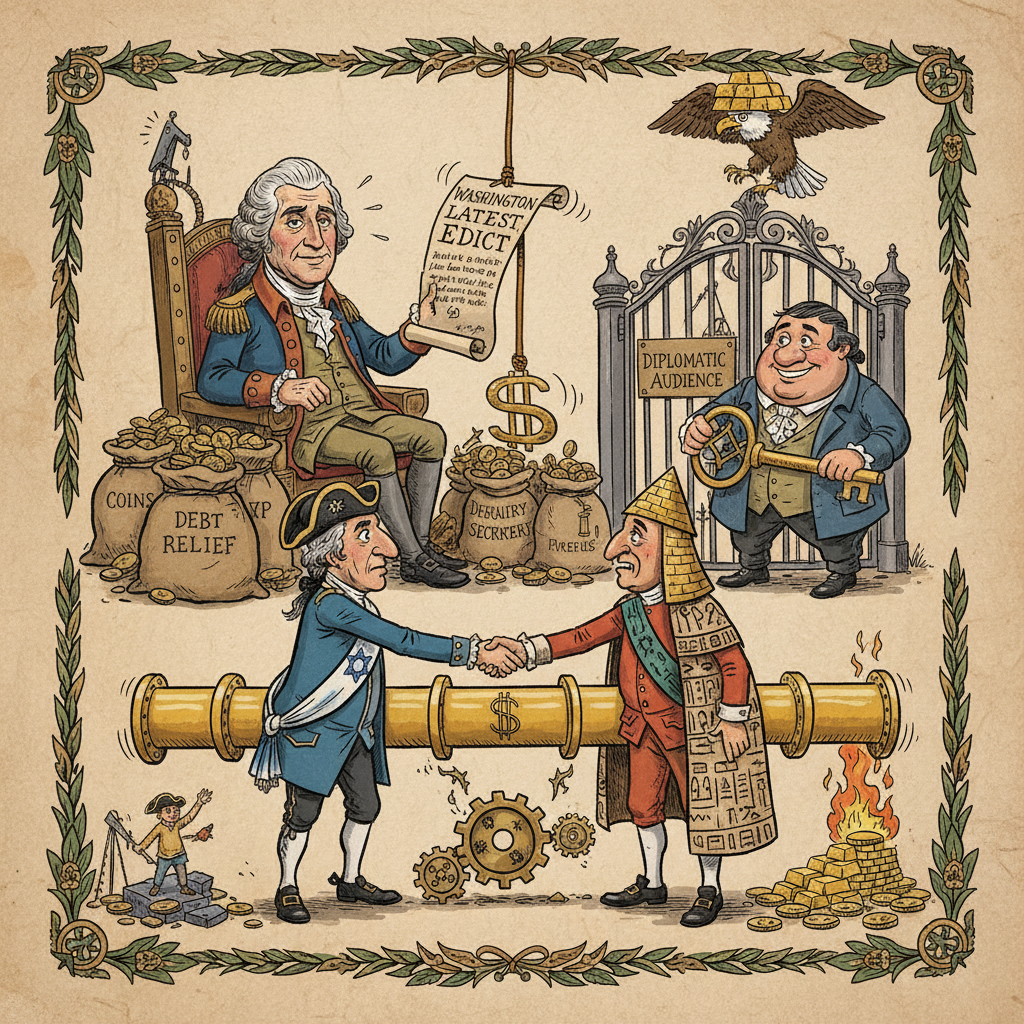
The White House's intricate diplomacy to mend relations between Israel and Egypt reportedly hinges on a natural gas deal, underscoring a familiar pattern of external economic orchestration.
Details:
- The U.S. is pushing Israeli Prime Minister Netanyahu to approve a significant natural gas deal with Egypt as a precondition for a summit with President Sisi.
- This strategic gambit, designed to "entice" leaders into dialogue, recalls the Crown's penchant for leveraging trade pacts to ensure colonial compliance, demanding economic fealty before a mere audience could be granted.
- The proposed "interdependence" aims to thaw relations, conveniently involving a U.S. firm, Chevron, as a key partner in the gas field.
Why it Matters:
The pursuit of "warmer peace" through externally dictated economic arrangements offers a disquieting echo of foundational grievances. When a dominant power insists on commercial transactions as a prerequisite for sovereign diplomatic engagement, facilitation and coercion blur. Such mandates recall the deference of "May it please your Excellency," even as true autonomy is subtly sidelined. This transactional diplomacy, while pragmatic, risks reducing complex geopolitics to a ledger. Stability through enforced interdependence, rather than genuine sovereign will, creates precarious détente, undermining the self-governance vital for lasting peace.