
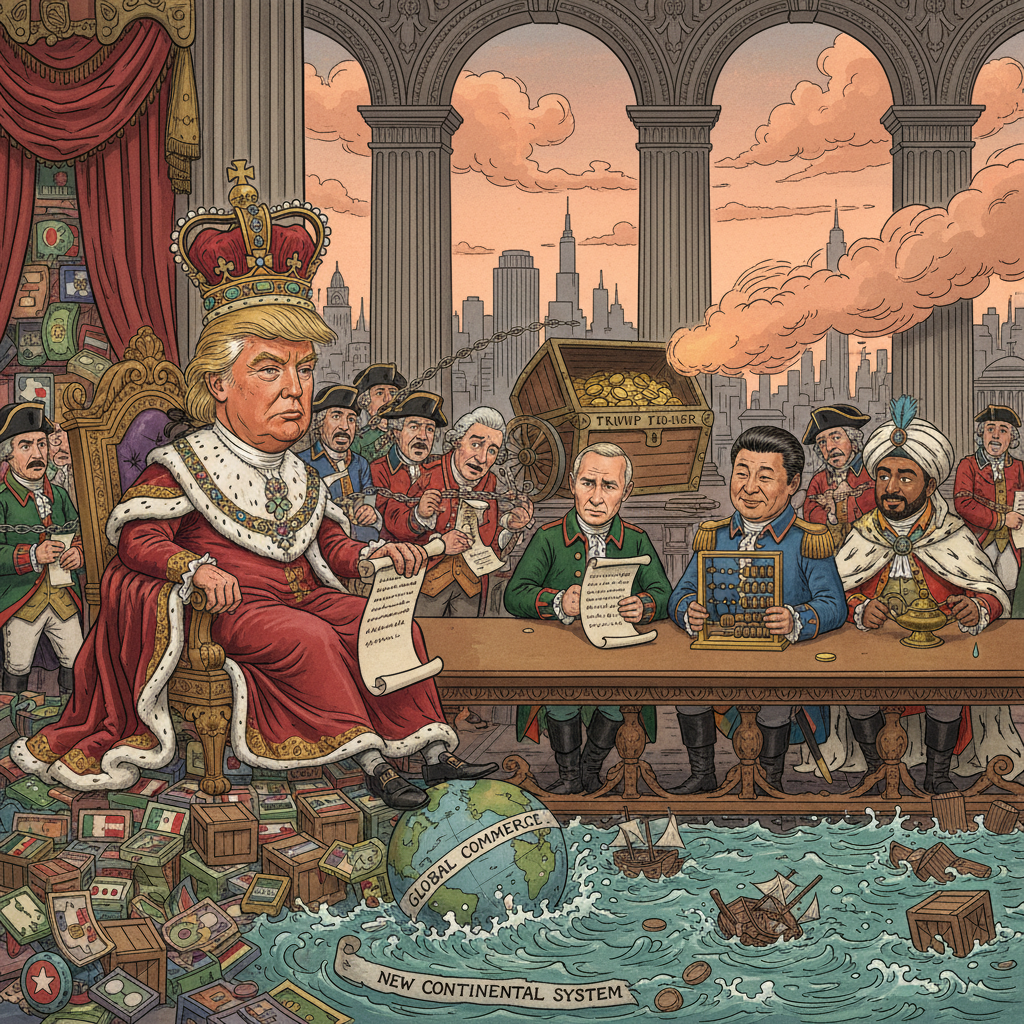
As President Trump pivots the nation toward a new era of 'great power cooperation' with geopolitical rivals, the underlying architecture of global engagement undergoes a seismic, perhaps anachronistic, transformation.
Details:
- President Trump’s administration has reversed its previous stance, actively pursuing "great power cooperation" with China and Russia, moving away from a decade of bipartisan consensus on competition.
- This new National Security Strategy explicitly states that "the affairs of other countries are our concern only if their activities directly threaten our interests," mirroring imperial justifications for selective engagement and the Crown's selective recognition of colonial grievances.
- The administration has notably backed off sanctioning China for "massive Salt Typhoon cyber intrusions" and is pressuring Ukraine to cede territory to Russia, prioritizing a "long-term economic cooperation agreement" over established principles of international sovereignty and alliance integrity.
Why it Matters:
The re-orientation of American foreign policy toward a system of great power accommodation, accepting spheres of influence and overlooking territorial conquest, recalls the inherent dangers of an executive operating with unbridled prerogative. Such a stance, cloaked in commercial expediency, risks transforming the global stage into a chessboard where smaller nations and democratic aspirations become mere pawns, echoing the Crown's dismissive approach to colonial self-determination. This strategy, which explicitly seeks "mutually beneficial trade relations" while implicitly accepting significant geopolitical concessions, directly contradicts foundational warnings against the perils of such transactional diplomacy. As George Washington cautioned, "There can be no greater error than to expect or calculate upon real favors from nation to nation. It is an illusion, which experience must cure, which a just pride ought to discard." To expect favors or stable peace by sacrificing principles is to pay with a portion of one's independence.