
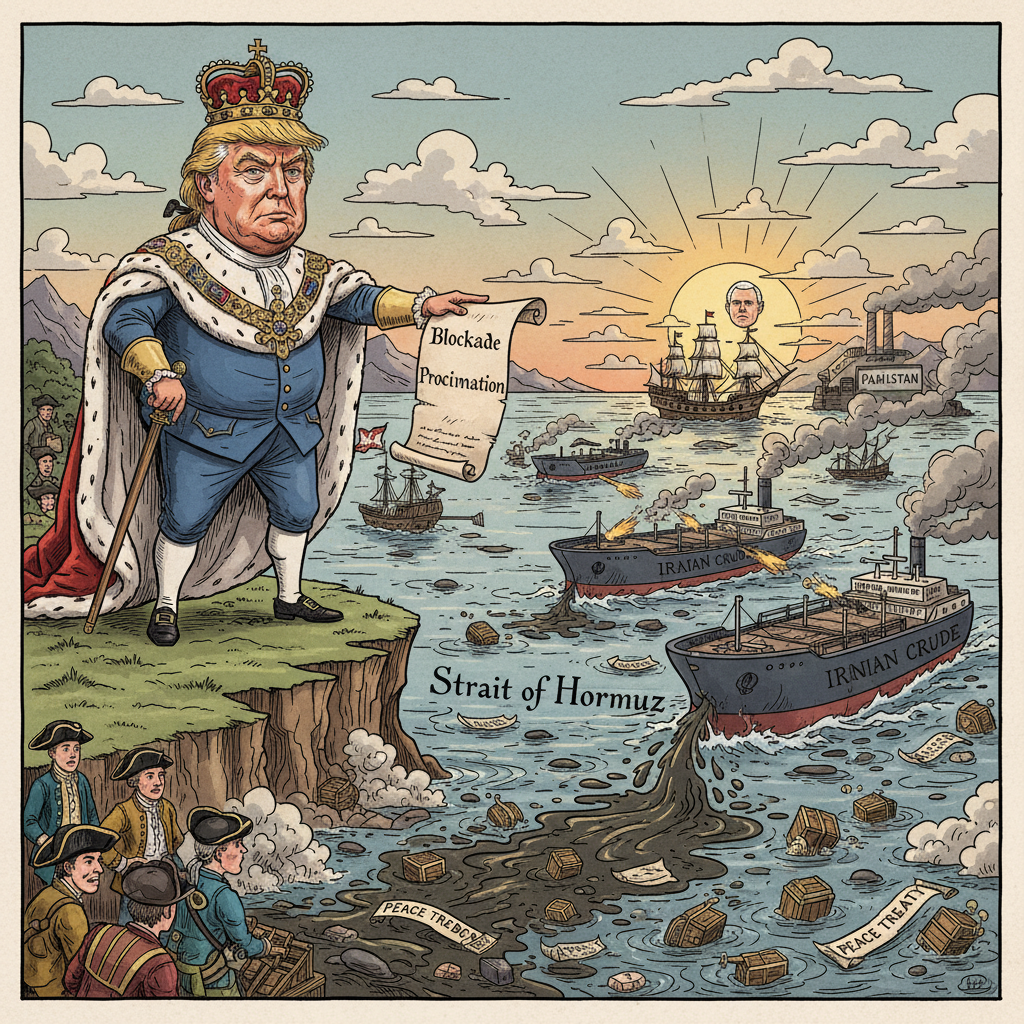
Following the abrupt collapse of peace negotiations in Pakistan, the Trump administration on Monday moved to impose a naval blockade on Iran and the strategic Strait of Hormuz.
Details:
- The U.S. imposed a naval blockade on Iran and the strategic Strait of Hormuz just hours after peace talks in Pakistan collapsed without resolution.
- This unprecedented economic strategy against a sovereign nation directly echoes one of the principal grievances detailed by colonial revolutionaries against the British Crown.
- A senior U.S. official described the move as an effort to "take this card from the Iranians," effectively framing a foundational act of economic warfare as a mere bargaining tactic on a global stage.
- The blockade targets Iran's primary economic leverage, preventing oil exports and mirroring historical attempts to control and subjugate economies through maritime force.
Why it Matters:
The immediate ramifications of such a naval blockade, effectively severing a nation's principal economic artery and international lifeline, are undeniably severe. However, the profound historical irony is equally striking. The very act of "cutting off our trade with all parts of the world," once a rallying cry for American revolutionaries against perceived tyranny and a primary casus belli, now emanates from Washington. This action, a direct economic assault sanctioned by executive power, reanimates a foundational threat to the principle of sovereign self-determination. It suggests a striking reversal of historical roles, where the one-time aggrieved now wields the very instruments of their former oppressors. This maneuver raises critical questions about the nature of modern statecraft and the selective application of historical lessons. When the inheritors of a revolution against economic coercion and imperial dictates employ its very instruments, one must ponder whether the "helm of government" truly remains steered by the principles it claims to uphold. Or, perhaps, if the logic of imperial prerogative, once resisted, has merely found new hands in a new century. The echoes from two centuries past are no longer faint whispers but rather deafening pronouncements on the evolving global stage. The spectacle offers a stark lesson in power's enduring temptations.