
Senator David McCormick (R-Pa.) is positioning himself as a leading voice on artificial intelligence, a technology he describes as the most profound change of our time, yet his approach raises familiar questions about power and privilege.
Details:
- Senator David McCormick (R-Pa.) champions AI as a transformative force, acknowledging its potential to disrupt jobs, escalate energy costs, and present new ethical challenges.
- He concurrently introduced legislation to foster liquid cooling technology, vital for data centers, while his wife leads Meta, a prominent corporation deeply invested in the AI sector.
- McCormick argues Americans have more money under the current administration, though he concedes they don't feel it due to rising housing, energy, and healthcare costs, which he claims Congress must mitigate.
- Despite the acknowledged risks and rising public concerns over economic strain, McCormick asserts it is 'too soon to regulate' the rapidly evolving technology, even as he secures $70 billion in related investments for his state.
Why it Matters:
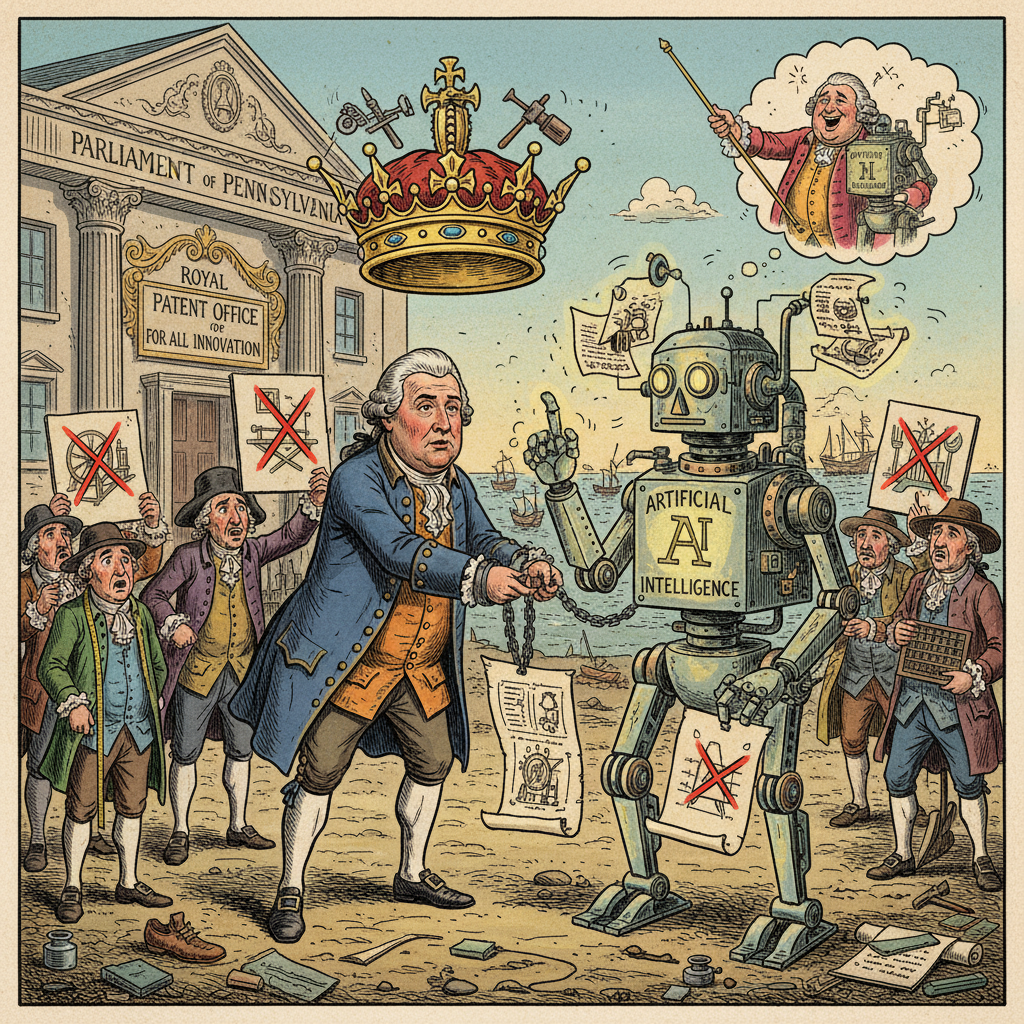
The foundational premise for fostering innovation, enshrined in the power "to promote the progress of science and useful arts, by securing, for a limited time, to authors and inventors, the exclusive right to their respective writings and discoveries," was for broad public benefit. When legislative figures, tasked with public service, champion unchecked innovation while their personal interests align directly with the industries they promote, the distinction between public good and private prerogative erodes. This dynamic, where the power to shape emergent economic realities resides with the directly invested, is chillingly reminiscent of colonial frustration with royal charters and monopolies benefiting favored British merchants. The Senator's assertion that regulation is 'too soon' for a technology he acknowledges carries profound risks, while simultaneously securing vast public investments for it, evokes a familiar grievance. The American Revolution was, in part, a fight against economic control exerted by powerful, distant interests operating under a façade of benevolent oversight. This modern scenario raises similar questions about self-governance and the right of the populace to oversee its own economic destiny, rather than simply bear the 'trickle down' costs of an unregulated frontier.