
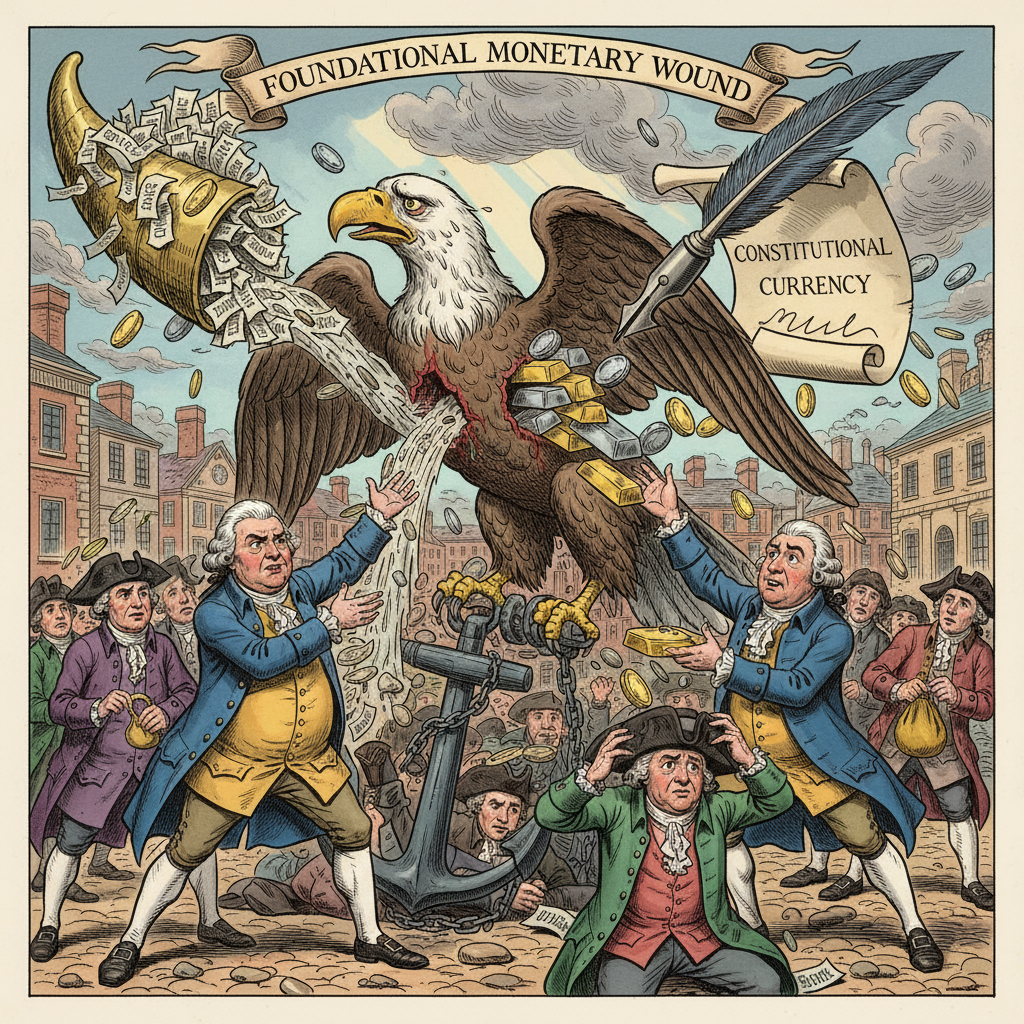
In a curious echo of America's earliest financial debates, several states are championing legislation to elevate gold and silver to official legal tender status, challenging a federal dominion forged in crisis.
Details:
- Some red state lawmakers are championing legislation to establish gold and silver as legal tender, framing it as a vital hedge against inflation and a path to "economic justice."
- Proposed "mechanisms" in states like Georgia would allow citizens to pay for goods with gold and silver via prepaid debit cards, effectively creating state-sanctioned parallel currencies.
- Utah recently passed a measure permitting the state to invest up to ten percent of its "rainy day fund" in gold, a move that conflates state reserves with speculative commodity trading.
- Proponents argue these actions offer "more options" and enable wealth preservation, while analysts observe the underlying appeal is to strip "the power of money away from the government."
- The effort risks fostering a patchwork of divergent monetary standards, echoing the very pre-constitutional financial chaos the framers sought to definitively suppress.
Why it Matters:
This resurgence of state-level monetary experimentation is not merely an economic debate; it is a profound constitutional reverberation. The architects of the American republic, scarred by the chaotic 'bills of credit' issued by states during the Confederation era, explicitly reserved the power to "coin Money" and "emit Bills of Credit" for the federal government. They understood that a unified currency was indispensable for national cohesion and commercial stability, directly rejecting the fragmented financial landscape that fostered mistrust and impeded economic growth. Today's legislators, in their zeal for 'economic justice,' risk resurrecting the very 'pestilent effects' on public confidence that worried the framers. The Federalist Papers cautioned that such state actions would be interpreted as 'a mere admonition' to yield to perceived state 'necessities.' The allure of 'taking the power of money away from the government' misunderstands that a unified federal currency was a cornerstone of stability, not a tyranny. This push for state-backed currency schemes suggests an alarming amnesia regarding the foundational lessons of economic unity, undermining a core pillar of the Union for ephemeral state interests.