
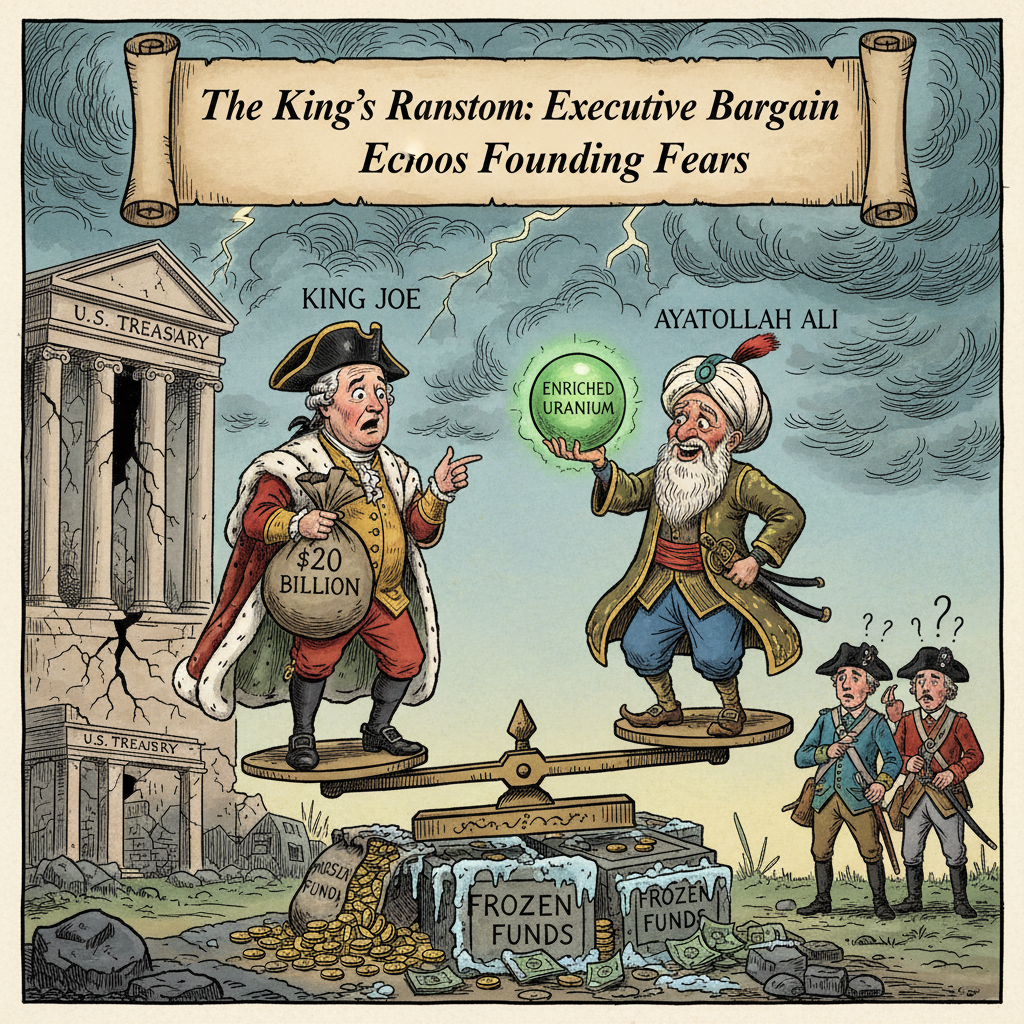
The White House is reportedly close to a $20 billion agreement with Iran, trading frozen funds for enriched uranium, sparking debate on executive authority and national security.
Details:
- The U.S. is reportedly nearing a $20 billion agreement to unfreeze Iranian funds in exchange for its enriched uranium stockpile, with negotiations ongoing in Islamabad.
- President Trump declared Iran would make a "very, very powerful statement... that they will not have nuclear weapons," a declaration of intent as binding as any royal decree upon distant subjects.
- The proposed 'voluntary' moratorium on nuclear enrichment and the ongoing disputes over the Strait of Hormuz recall the Crown's arbitrary enforcement of trade regulations and maritime control.
- The administration's focus on obtaining Iran's "nuclear dust" through financial transaction, without explicit congressional approval or debate on broader regional stability, mirrors the unilateral economic policies imposed on colonies.
Why it Matters:
This negotiation, presented as pragmatic, resurrects foundational questions about executive power. A chief executive bargaining over national security and global finance, largely outside legislative scrutiny, echoes grievances of the American Revolution. 'There are two other considerations, relating to this head, that deserve the most serious attention,' as John Dickinson wrote, concerning our constitutional architecture. The potential for a single authority to unilaterally commit vast sums and redefine national security without robust checks risks normalizing a monarchical impulse. Executive authority bypassing oversight for geopolitical expediency is a stark reminder of the fragile balance between efficiency and liberty our founders fought to secure.