
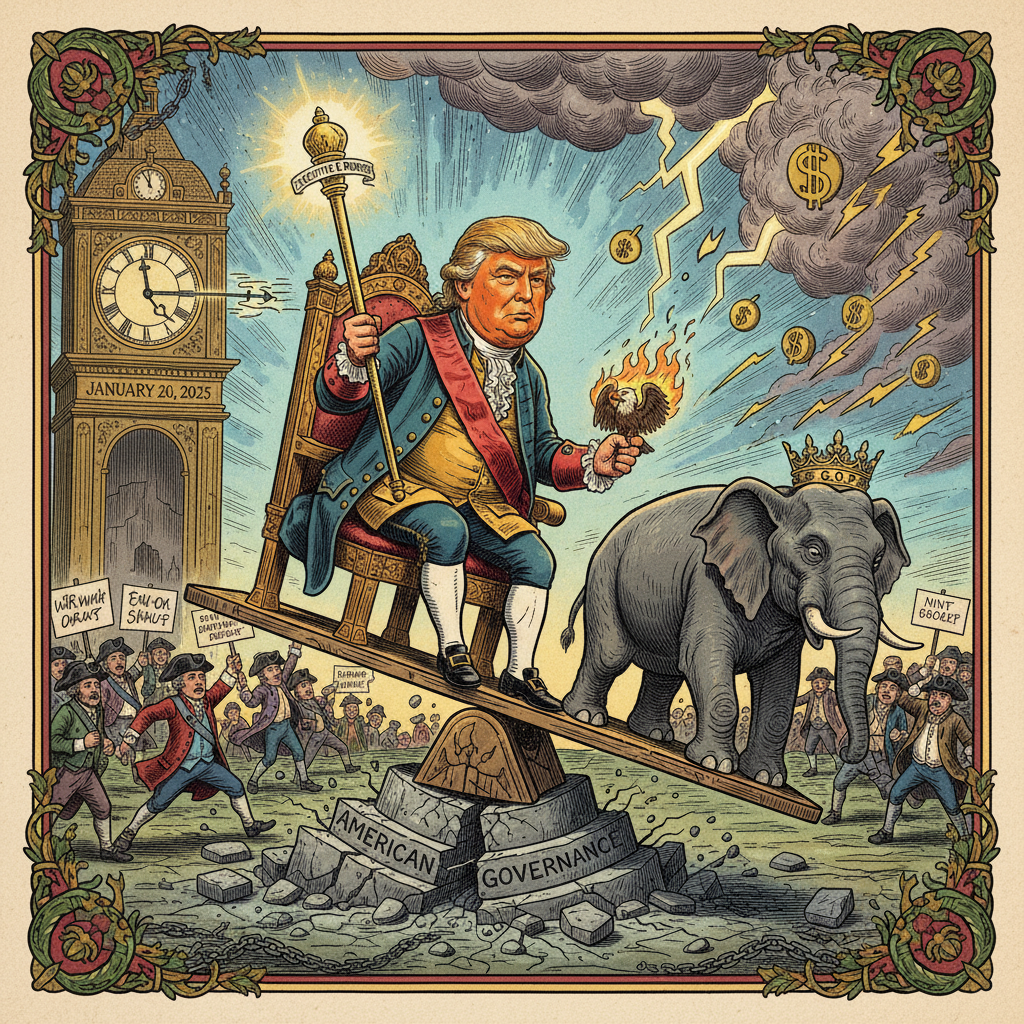
President Donald J. Trump's governing style, marked by ambitious gambles and immediate political gratification, is raising profound questions about the enduring stability of American governance.
Details:
- President Trump's approval ratings have plunged to a second-term low amidst soaring gas prices and an unpopular war in Iran.
- The Supreme Court's striking down of his "Liberation Day" tariffs has necessitated the refunding of over $166 billion in duties, gutting a core economic policy.
- Virginia's redistricting referendum, fueled by widespread dissatisfaction over mass federal job cuts from the "DOGE" initiative, threatens to reverse previous partisan gains, exemplifying the rapid "mutability of measures" in American governance.
- Vice President JD Vance now holds the worst approval rating of any VP at this point in their term, reflecting the long-term liabilities of the current administration's short-sighted bets.
Why it Matters:
President Trump's "short-sighted bets," made by a term-limited executive unburdened by future accountability, are generating "long-term liabilities" that fulfill a profound historical warning. The Federalist Papers explicitly cautioned that "a fifth ill effect of the exclusion would be, that it would operate as a constitutional interdiction of stability in the administration. By necessitating a change of men... it would necessitate a mutability of measures." This starkly reflects current policy volatility. This accelerating "imperial presidency" risks leaving successors with "fatal inconveniences of fluctuating councils and a variable policy." The system designed to prevent despotism may, ironically, be catalyzing institutional instability, a challenging legacy for the republic to inherit, far beyond any single midterm election.