
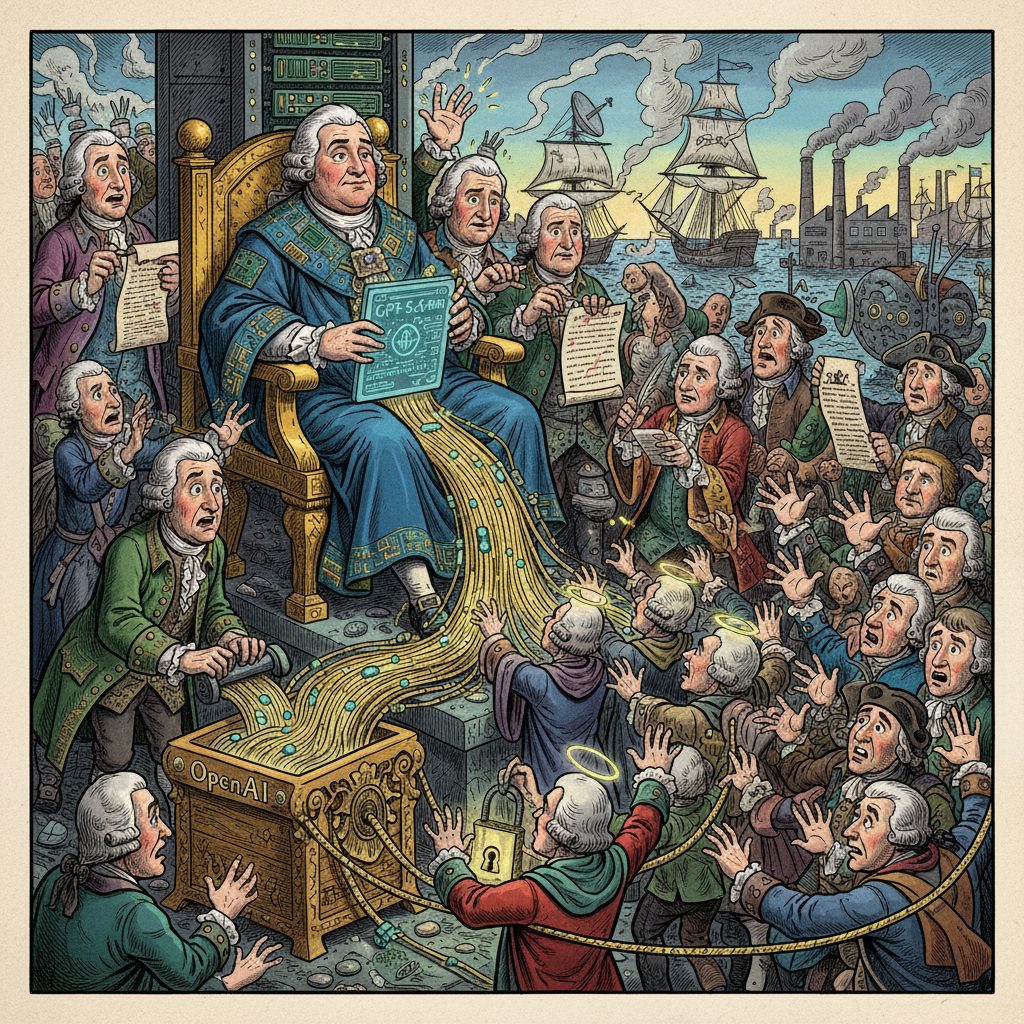
OpenAI's recent closed-door briefings with federal agencies and Five Eyes partners on its advanced GPT-5.4-Cyber model mark a significant shift in national security infrastructure, raising nuanced questions about digital sovereignty.
Details:
- OpenAI has launched its new GPT-5.4-Cyber model, offering vetted government agencies and Five Eyes allies exclusive "Trusted Access" to its advanced capabilities.
- This tiered system for critical digital infrastructure evokes the exclusive trading charters and monopolies granted by the British Crown to favored companies, limiting access and fostering dependency among the general populace.
- While touted as a solution for outdated federal systems, the arrangement effectively cedes vital aspects of national digital defense to a private entity, with control over the keys to advanced security tools, bypassing traditional oversight mechanisms.
Why it Matters:
This emerging landscape, where a private corporation becomes the indispensable arbiter of digital defense capabilities, raises fundamental questions about the locus of national sovereignty. The exclusive "Trusted Access" model, while promising enhanced security, inadvertently establishes a new form of digital prerogative, operating largely outside the traditional checks designed to ensure public accountability. Such arrangements subtly erode the distinctions outlined in the Virginia Declaration of Rights, which asserted that powers must be "separate and distinct" to restrain oppression and ensure leaders "return into that body from which they were originally taken." The historical parallels are stark: colonial grievances often stemmed from perceived unequal treatment, the imposition of external authorities, and limited access to vital resources or decision-making processes. Today, as critical infrastructure relies increasingly on privately developed, exclusively accessed AI, the seeds of a new form of digital disenfranchisement may be sown, where national defense becomes a tiered service rather than an inherent public good. The ramifications for transparency, equitable protection, and the ultimate control of essential state functions are yet to be fully comprehended.