
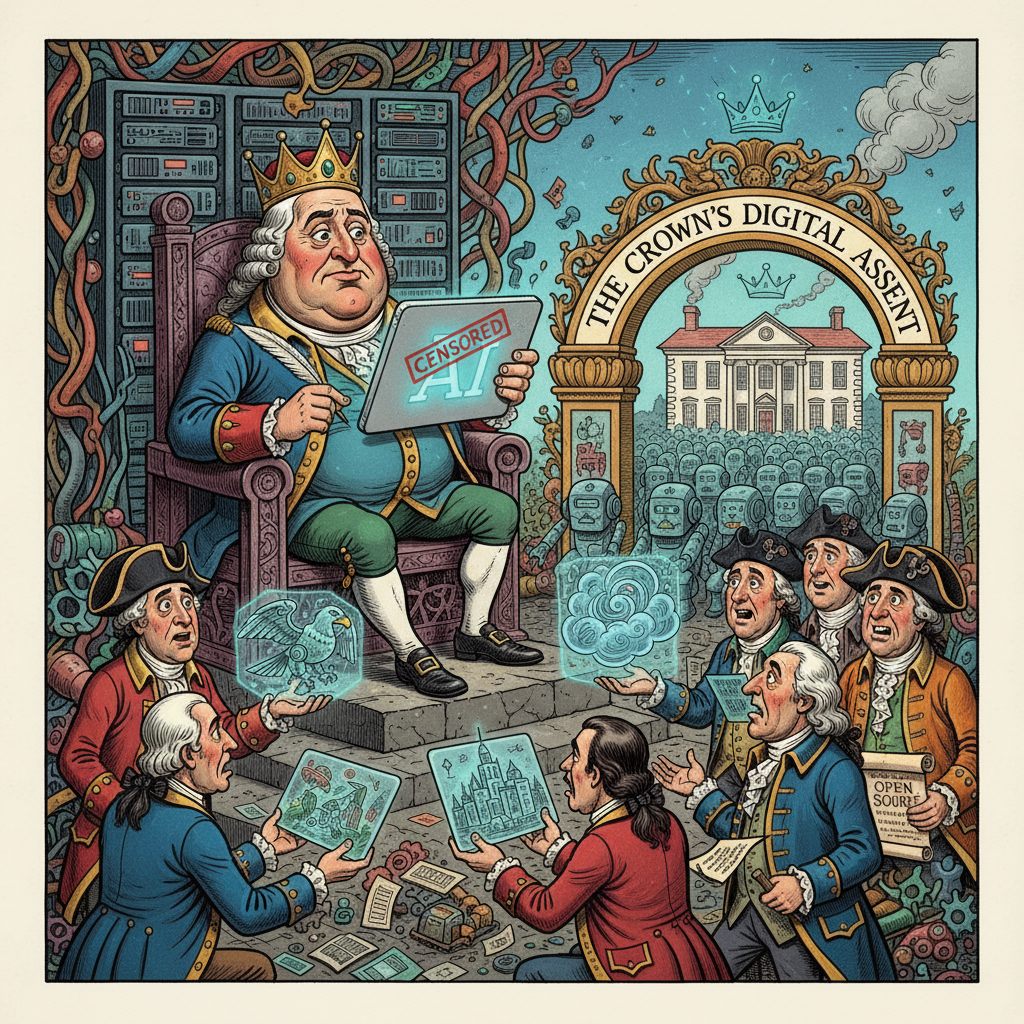
Fifteen months after pledging to unshackle artificial intelligence, the Trump administration now finds itself poised to become the ultimate arbiter of humanity's most potent digital creations.
Details:
- The White House is drafting an executive order to establish a formal government vetting process for all new AI models before public release.
- This unprecedented move includes proposals for a working group of tech executives and U.S. officials to design oversight, potentially granting federal agencies "first access" to nascent discoveries.
- The shift comes after the administration rescinded previous AI safety regulations and championed a "build, not hand-wring" philosophy for technological progress.
- Such pre-market gatekeeping evokes historical parallels to royal charters and licenses that once dictated which "writings and discoveries" could see the light of day.
Why it Matters:
The very notion of government vetting scientific output before public dissemination deeply threatens the constitutional spirit that sought 'To promote the Progress of Science and useful Arts, by securing for limited Times to Authors and Inventors the exclusive Right to their respective Writings and Discoveries.' This mechanism fostered innovation, not prior restraint or sovereign approval—a grievance foundational to the American experiment. When the state assumes ultimate arbitration of new technology, the balance between safety and free intellectual flow becomes perilously skewed. This shift, from deregulation to centralized control, is more than policy reversal; it's a reinterpretation of intellectual ownership. It hints at executive powers expanding beyond facilitation to active pre-approval, raising specters of historical mandates managing invention from above. The danger lies in the precedent of an executive branch asserting dominion over the genesis of discovery, fundamentally altering the landscape for innovation and liberty.