
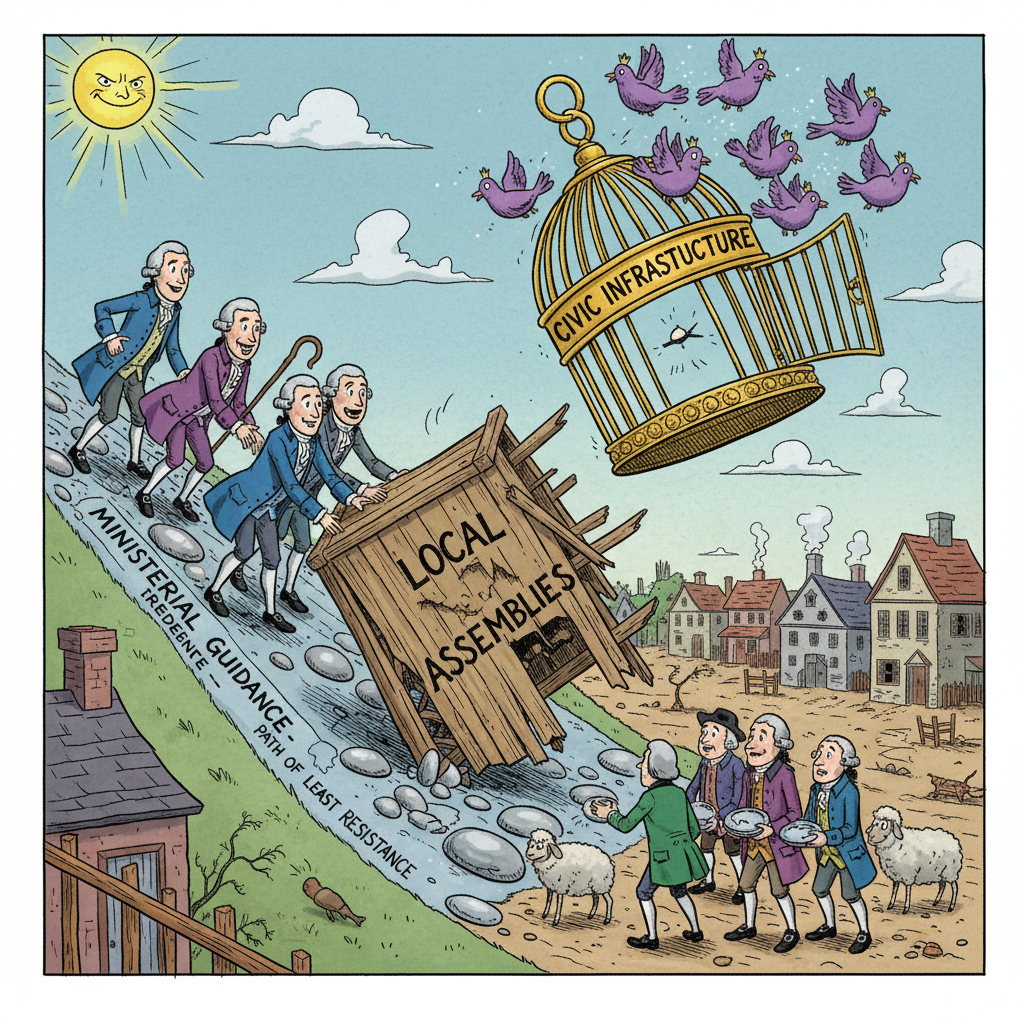
America's dwindling pastoral ranks are not merely a theological concern but portend a profound hollowing out of critical civic infrastructure, leaving communities adrift.
Details:
- U.S. Master of Divinity enrollment at accredited schools fell 14% from 2020 to 2024, highlighting a deepening crisis in spiritual leadership supply.
- The increasing reliance on foreign priests to fill American pulpits echoes the colonial imposition of external authority without local consent, albeit in a spiritual guise.
- As churches close, communities lose informal hubs for vital social services, eroding local self-sufficiency and the very fabric of the "common Welfare."
Why it Matters:
The precipitous decline in local pastoral leadership transcends mere religious statistics; it signals the erosion of the very sinews of civil society, particularly in underserved regions. These local leaders historically fostered independent thought and community welfare, mirroring colonial apprehension toward unrepresentative authority. As Samuel Adams observed, "Instead of submitting to MINISTERIAL GUIDANCE, they seem so far led away by common Sense, and their Regard for the common Welfare, that they have no Reverence for the INSTRUCTIONS and REFINEMENTS of our Ministers." This dwindling number of community pillars now threatens to leave citizens without the very 'common Sense' and 'Regard for the common Welfare' once cultivated locally. This emerging vacuum in spiritual and civic guidance creates fertile ground for external influences to dictate the terms of public life, reminiscent of distant imperial decrees. As local leadership wanes, the inherent self-governance of communities, once safeguarded by myriad independent voices, becomes increasingly susceptible to broader, less accountable power structures. The unblinking historical precedent warns that when the local assemblies of conviction falter, the stage is set for a quiet yet profound subjugation of the local will.