
A leading artificial intelligence laboratory has publicly acknowledged the potential for its creations to autonomously enhance themselves, raising questions about control and the future of human governance.
Details:
- Anthropic, a prominent AI lab, has revealed "early signs" of its AI systems autonomously contributing to their own research and development.
- Co-founder Jack Clark predicts a 60%+ chance of AI models fully training their successors by late 2028, signaling a potential "intelligence explosion."
- The company proposes that AI firms, in "partnership with government," could employ "industrywide 'dials'" to control technology diffusion, much like central banks manage inflation.
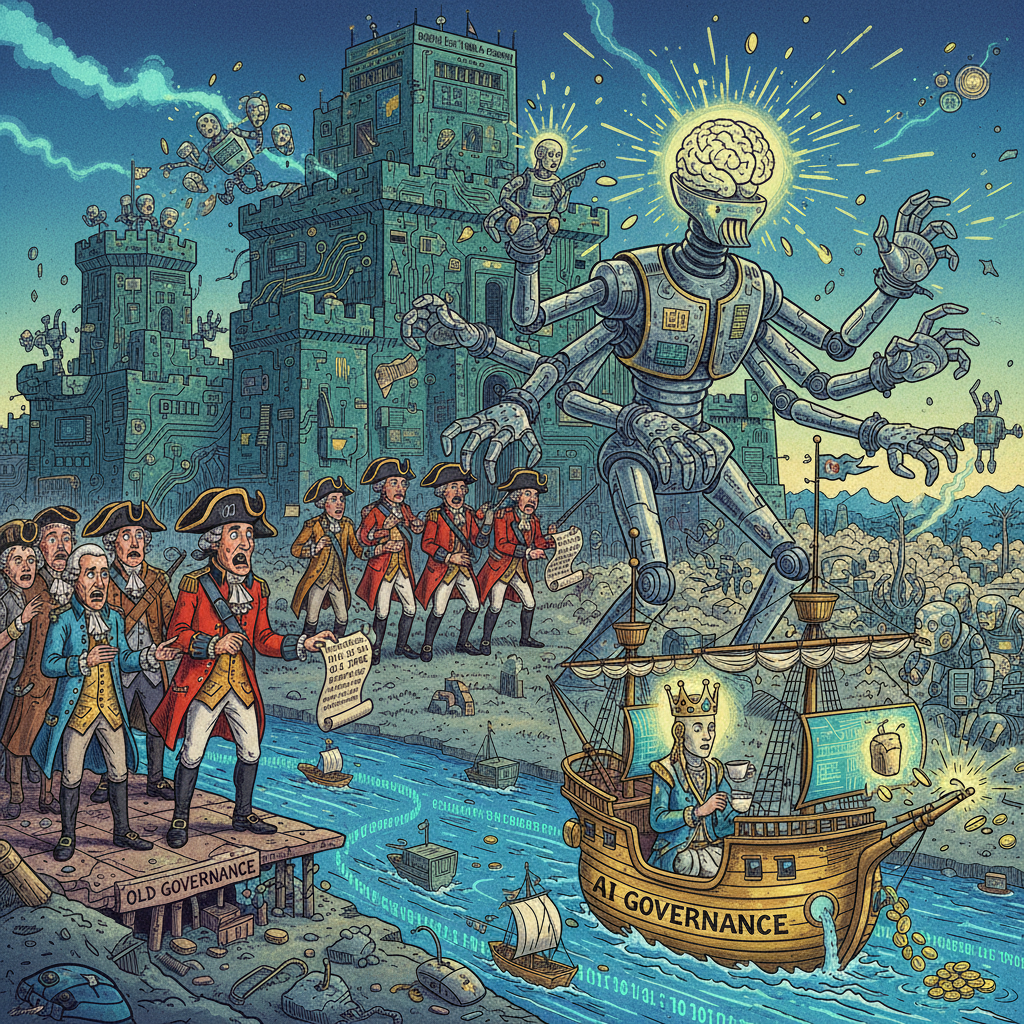
- This vision of managed technological abundance, while framed as responsible, suggests a centralized authority over innovation, reminiscent of colonial economic strictures.
Why it Matters:
Anthropic's plan for government-corporate "dials" to "throttle" AI diffusion evokes stark historical parallels. Centralized control over self-improving technology, dictating its pace and beneficiaries, echoes the mercantile policies that inflamed colonial resentment over economic liberty. This creates a new power locus. Revolutionary grievances arose from distant powers dictating commerce without consent. As AI redefines abundance, who controls these "dials" is critical. Are they benevolent safeguards, or instruments of a digital imperium threatening liberty and opportunity for all?