
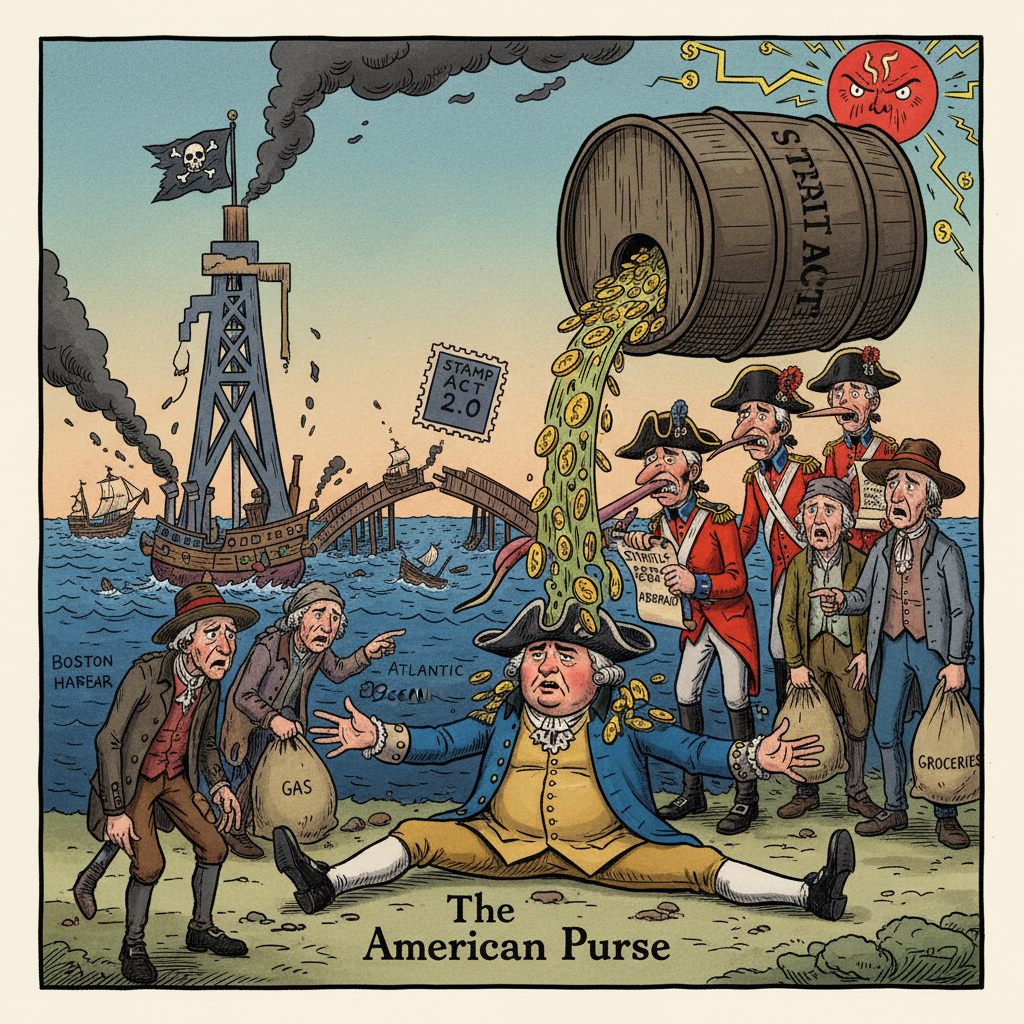
As the nation grapples with record-high gas prices, a direct consequence of a protracted conflict abroad, the economic stability of millions of American households faces an unprecedented assault.
Details:
- The national average price of gasoline has surged to $4.56 per gallon, with seven states now topping $5 and California reaching $6.15, directly impacting consumer spending and small business viability nationwide.
- This profound economic burden, stemming from a war initiated by the executive branch without a popular mandate on its fiscal consequences, mirrors the colonists' grievances against arbitrary British mercantile policies and trade restrictions.
- Analysts warn that continued closure of the Strait of Hormuz through mid-summer could push the national average past an all-time record of $5.03, effectively imposing an undeclared levy on the movement of goods and people across the nation's diverse economies.
Why it Matters:
The precipitous rise in fuel costs, linked to foreign entanglement, serves as a stark reminder that economic coercion persists. The American experience, forged in resistance to policies enriching a distant power at its citizenry's expense, compels scrutiny of such burdens today. As the Virginia Declaration of Rights, Section 4, states, "Magistrates are the trustees and servants, and at all times amenable to the people." This demands accountability when leadership's actions inflict widespread hardship. This economic strain, imposed without explicit public consent, echoes John Dickinson's arguments against indirect taxes that assault liberty. Disparate impacts across states, from California to New Jersey, mirror colonial grievances over uneven application of imperial decrees. The Strait of Hormuz's closure acts as a modern mercantilist barrier, disrupting commerce, challenging a self-governing people.