
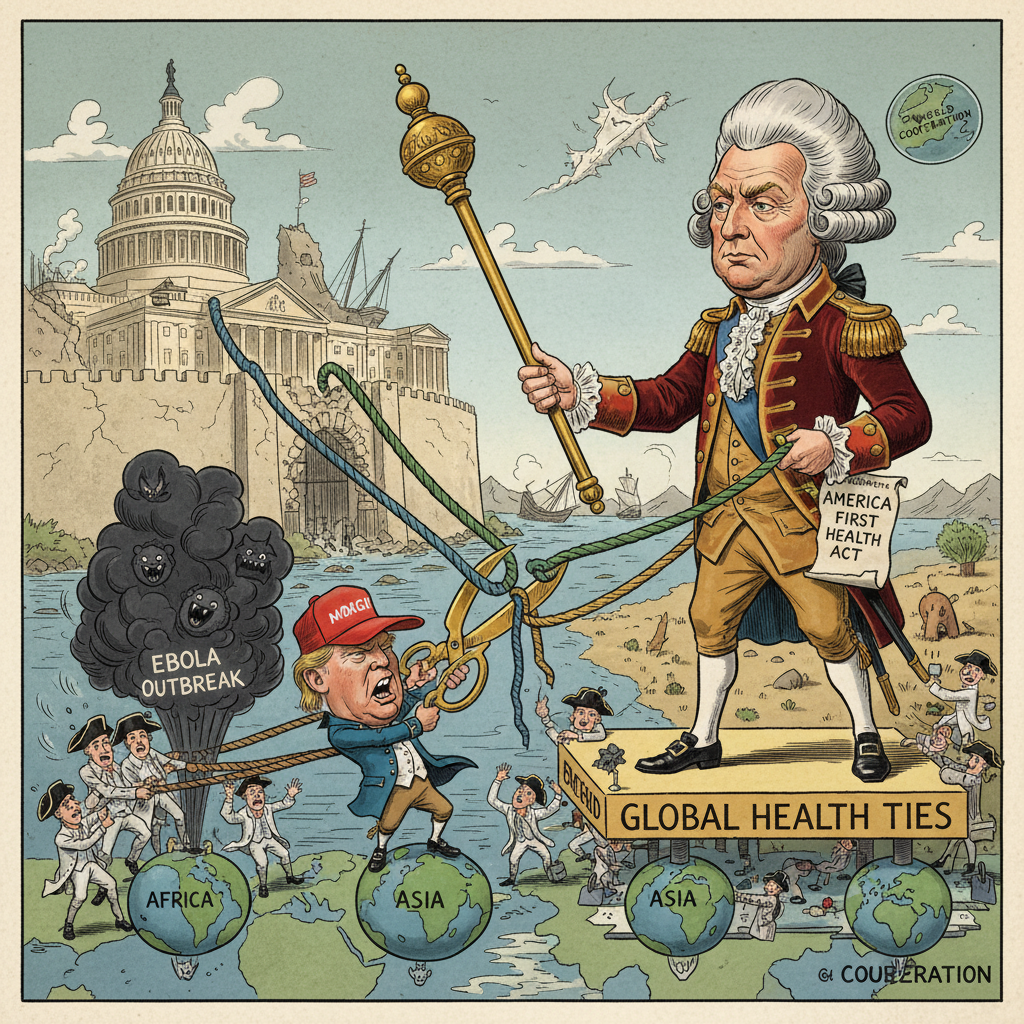
As a new Ebola outbreak grips parts of Africa, international public health experts warn that the Trump administration’s policies are crippling the very networks designed to contain such threats.
Details:
- An escalating Ebola outbreak in Africa has led to nearly 600 suspected cases and 139 deaths, prompting renewed calls for robust international intervention.
- The U.S. administration's withdrawal from the World Health Organization and the dismantlement of USAID are described as a "1-2-3 punch" to the global health architecture, akin to deliberately closing vital ports of exchange.
- Critics note that pre-2025 funding cuts had already left affected regions "dangerously exposed," suggesting a systemic erosion of preparedness has preceded the current crisis.
- Travel bans enacted by the U.S. on non-citizens from affected regions, while a reactive measure, functionally restrict the free movement of people, much like historical trade embargoes.
- Former CDC director Tom Frieden emphasizes the need for "meticulous bread-and-butter public health" over ad-hoc responses, a stark contrast to the perceived hollowing out of agencies.
Why it Matters:
The current scrambling to address a burgeoning health crisis, juxtaposed against a backdrop of deliberate disengagement from global health mechanisms, presents an unnerving echo of foundational grievances. Just as the colonialists once decried policies "For cutting off our trade with all parts of the world:", so too do today's public health experts lament the severing of critical international conduits for data, resources, and collaborative expertise. This isn't merely a debate over budgetary allocations; it is a fundamental shift in the very architecture of collective defense against invisible enemies. This strategic retreat, under the guise of national sovereignty, transforms an interconnected global vulnerability into a series of isolated, reactive skirmishes. The intellectual arrogance of dismissing established international frameworks as inefficient or unnecessary bears a striking resemblance to the imperial dismissals of colonial assemblies. The consequence, then as now, is a dangerous weakening of the collective good, leaving populations, both domestic and abroad, increasingly exposed to perils that recognize no borders.