
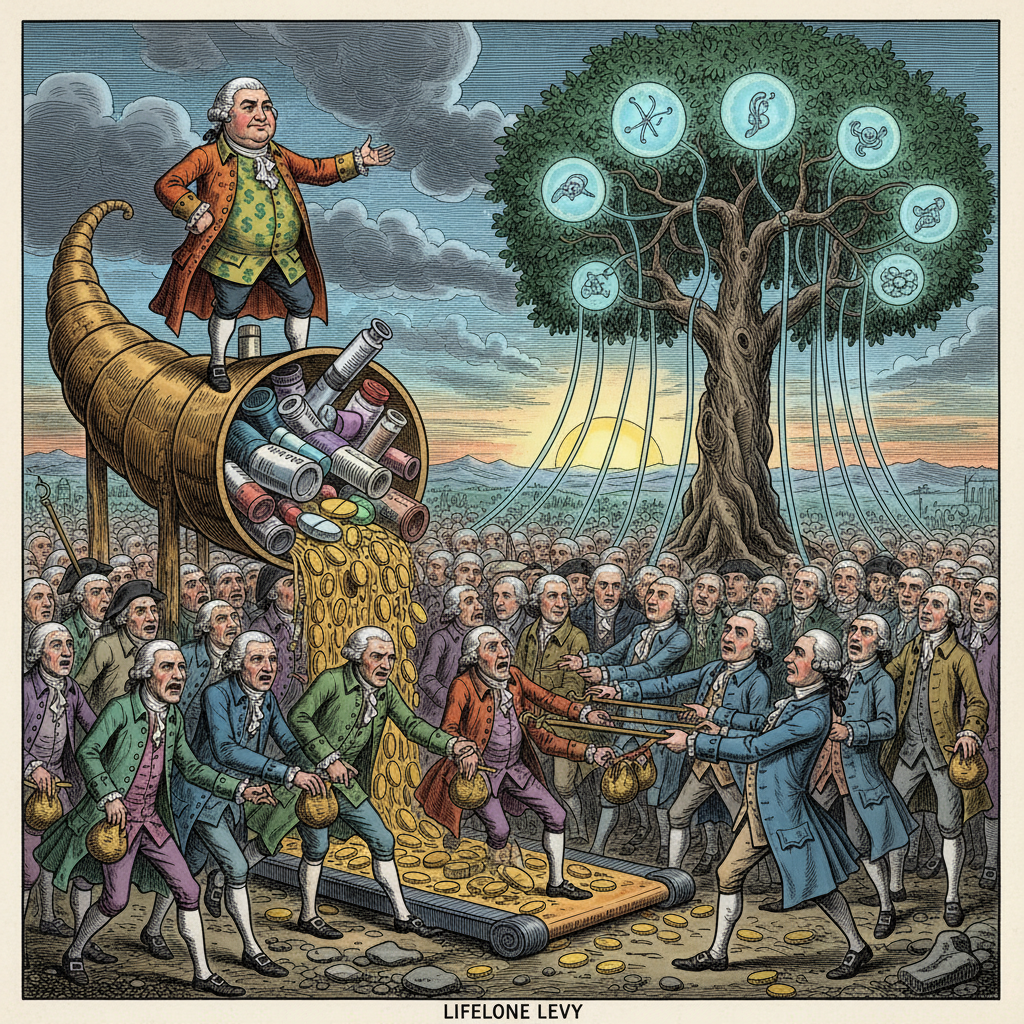
Recent advancements in medical science offer a tantalizing glimpse into a future where once-fatal diseases can be managed, if not eradicated, raising profound questions about the nature of liberty.
Details:
- Revolution Medicines' experimental pancreatic cancer treatment doubled patient life expectancy to a median of 13.2 months in late-stage clinical trials.
- The most cutting-edge curative gene therapies brought to market in recent years carry price tags reaching into the millions, often requiring indefinite future expenditure for sustained benefit.
- This economic model echoes the colonial imposition of internal taxes, extracting perpetual revenue from the individual's very right to a sustained existence, without meaningful representation in pricing or access.
Why it Matters:
The excitement surrounding these medical marvels is undeniable, yet the underlying economics present a troubling echo of history. The colonial era's grievances against arbitrary taxation, as articulated by John Dickinson, were rooted in the principle that no power could justly extract perpetual revenue without the consent of the governed. Our modern breakthroughs, while extending life, paradoxically introduce a new, internal taxation on the body politic. This system risks perpetuating economic dependence rather than true liberation from disease, transforming the very essence of living longer into a commodity with a perpetually dictated price. When the pursuit of longevity becomes a lifelong levy, the promise of scientific advancement inadvertently mirrors the financial subjugation our forebears fought to escape, fundamentally redefining a 'free' existence.