
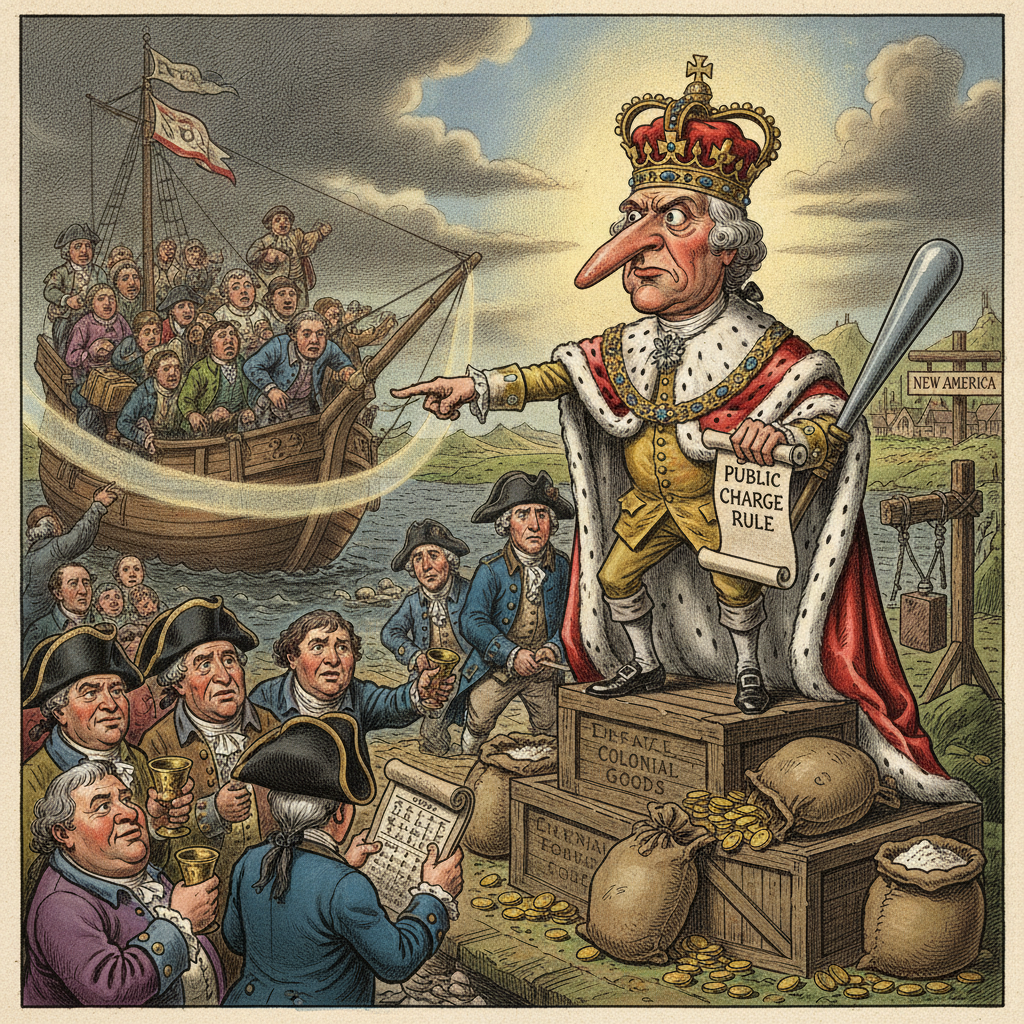
The recent reinstatement of the 'public charge' rule by the Trump administration offers a contemporary echo of foundational disputes over who is fit to populate a nation and under what stringent conditions.
Details:
- The Trump administration has formally re-established the framework to consider immigrants' use of programs like Medicaid and CHIP in green card determinations.
- This measure effectively raises the conditions for permanent residency, mirroring historical efforts to regulate population growth and demographic composition.
- Public health advocates warn of a "chilling effect," where eligible families may forgo vital services, a phenomenon historically observed when access to basic needs is contingent on political favor.
- The Department of Homeland Security projects annual savings exceeding $13 billion through a reduction in 'transfer payments,' a figure that neatly quantifies the cost of communal welfare.
Why it Matters:
The implications extend beyond immediate fiscal considerations. This policy, by discouraging vulnerable populations from seeking necessary health services, risks exacerbating existing disparities and increasing reliance on emergency care, thereby shifting costs rather than eliminating them. The notion that a governing body would actively "obstructing the Laws of Naturalization of Foreigners; refusing to pass others to encourage their migration hither, and raising the conditions of new Appropriations of Lands" is not novel, but a precise echo of the foundational grievances articulated centuries ago. To redefine self-reliance as an absolute prerequisite for integration into the national fabric is to implicitly question the very premise of a commonwealth, where mutual support has historically underpinned collective strength. Such a stance, while framed in the language of economic prudence, ultimately recalibrates the social contract, potentially shaping a future America with a narrower definition of who belongs and a longer memory of who was deemed burdensome.