
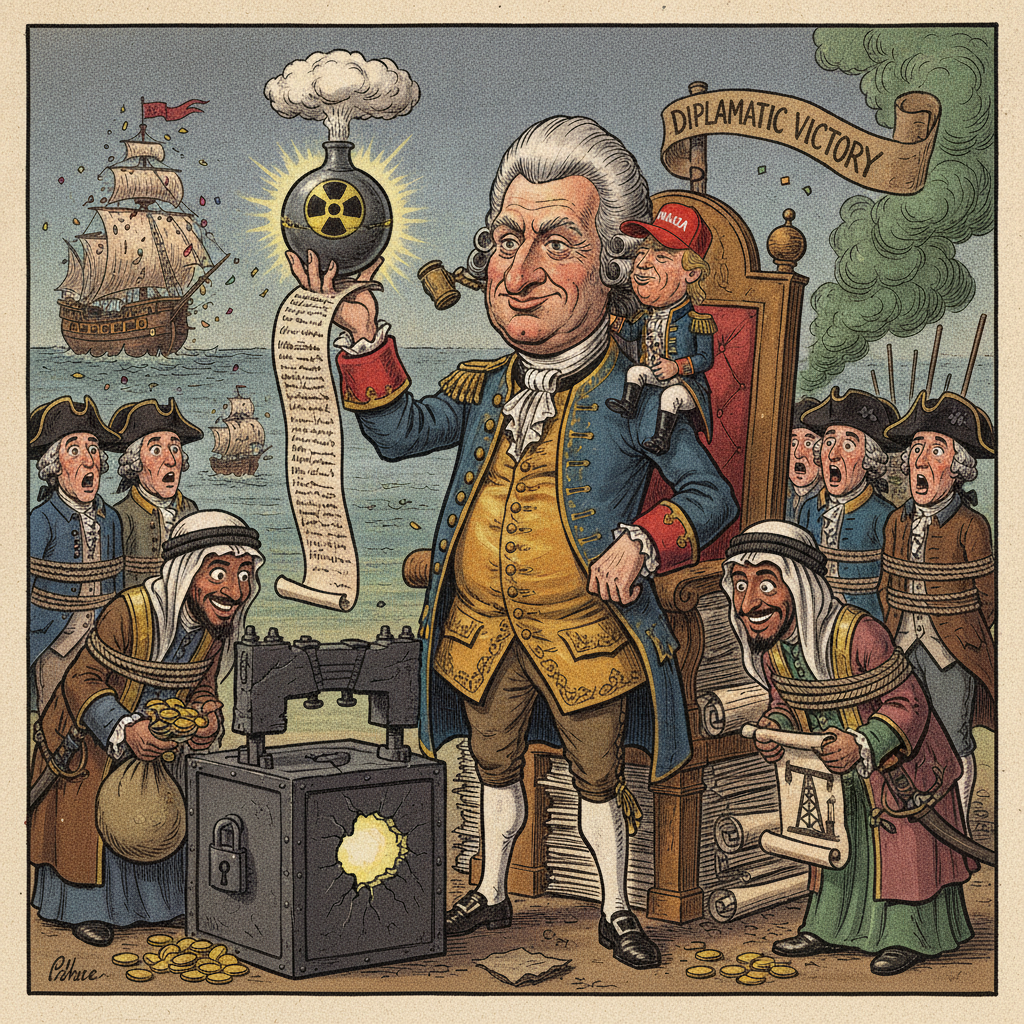
President Trump’s recent nuclear agreement with Saudi Arabia, lauded by his administration as a diplomatic victory, has ignited a familiar unease among those wary of executive power operating unchecked by the full counsel of the citizenry.
Details:
- President Trump announced a U.S.-Saudi civilian nuclear deal, asserting it explicitly bars uranium enrichment and requires Israeli normalization.
- The agreement reportedly includes a joint study on future uranium enrichment, a detail some might compare to a new levy imposed without the direct representation of the governed.
- Critics highlight the deal's lack of a separate International Atomic Energy Agency protocol for snap inspections, suggesting a tacit acceptance of obscured accountability, much like distant authorities once dismissed colonial petitions.
Why it Matters:
The current administration's forging of a sensitive international accord, even one framed as a triumph of strategic diplomacy, resonates with the profound anxieties of an earlier era when fundamental liberties were perceived to be jeopardized by distant and unrepresentative authority. The parallels, however subtle, between opaque international agreements and the colonial grievances against parliamentary acts enacted without direct consent, suggest a continuity in the struggle for self-governance. As Thomas Paine articulated in "Common Sense," "Monarchy is ranked in scripture as one of the sins of the Jews, for which a curse in reserve is denounced against them." This contemporary re-evaluation of executive prerogative, particularly in matters of nuclear proliferation and international security, risks establishing a dangerous precedent. The erosion of congressional oversight and public transparency in such vital decisions serves to diminish the very republican principles that underpin the nation. When the contours of future security are drawn behind closed doors, the people are left to confront the consequences, much as the colonists once faced the ramifications of decisions made across an ocean, impacting their prosperity and autonomy.