
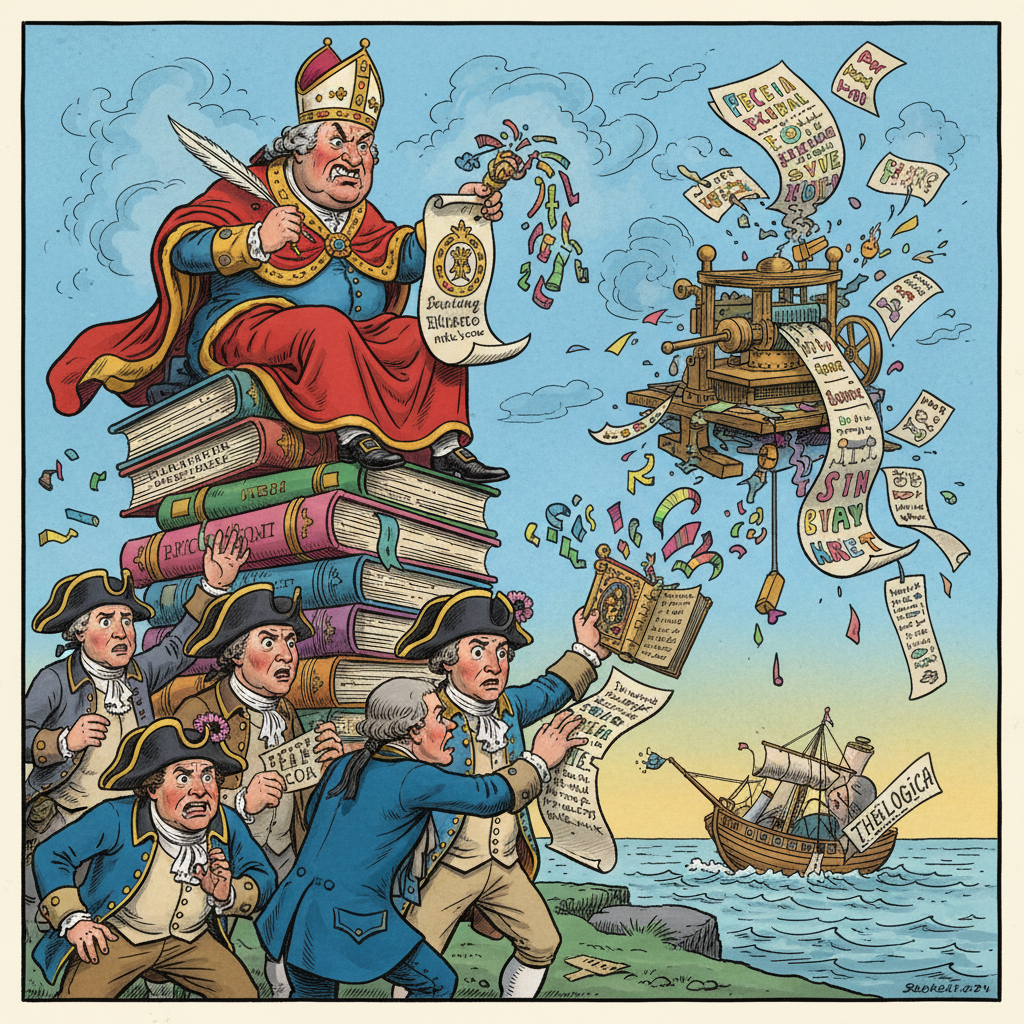
A rare confluence of theological authority and linguistic precision is challenging the delicate balance of American political discourse, drawing parallels to foundational disputes over external influence.
Details:
- Pope Leo XIV, a native English speaker, has amplified his direct critiques of President Trump's domestic and foreign policies.
- This unprecedented clarity from Rome has circumvented the traditional linguistic buffers, prompting whispers of a new form of distant, unrepresentative pronouncement akin to colonial edicts.
- The President, long accustomed to unmediated communication, now finds himself in a theological-political skirmish with a sovereign entity whose every word lands with unbuffered force.
Why it Matters:
The current imbroglio between the White House and the Holy See, superficially a clash of personalities, reveals a deeper, more fundamental tension over the legitimate bounds of external authority within American political life. The absence of traditional diplomatic intermediaries, in this case, a language barrier, strips away the comfortable ambiguity that once allowed the American body politic to selectively interpret or even dismiss foreign advisories. As John Adams noted, albeit in a different context, "Pope flattered tyrants too much when he said," implying a historical awareness of external religious authority potentially overstepping its bounds in political affairs. This direct, unmediated communication from a foreign sovereign, however morally guided, compels American citizens to confront an external voice without the customary filters. In an era where digital platforms have already flattened diplomatic norms, the Vatican's new linguistic strategy risks reawakening historical anxieties about foreign powers directly influencing domestic policy and elections, challenging the very notion of an independent American political destiny forged through self-governance, not pontifical counsel.